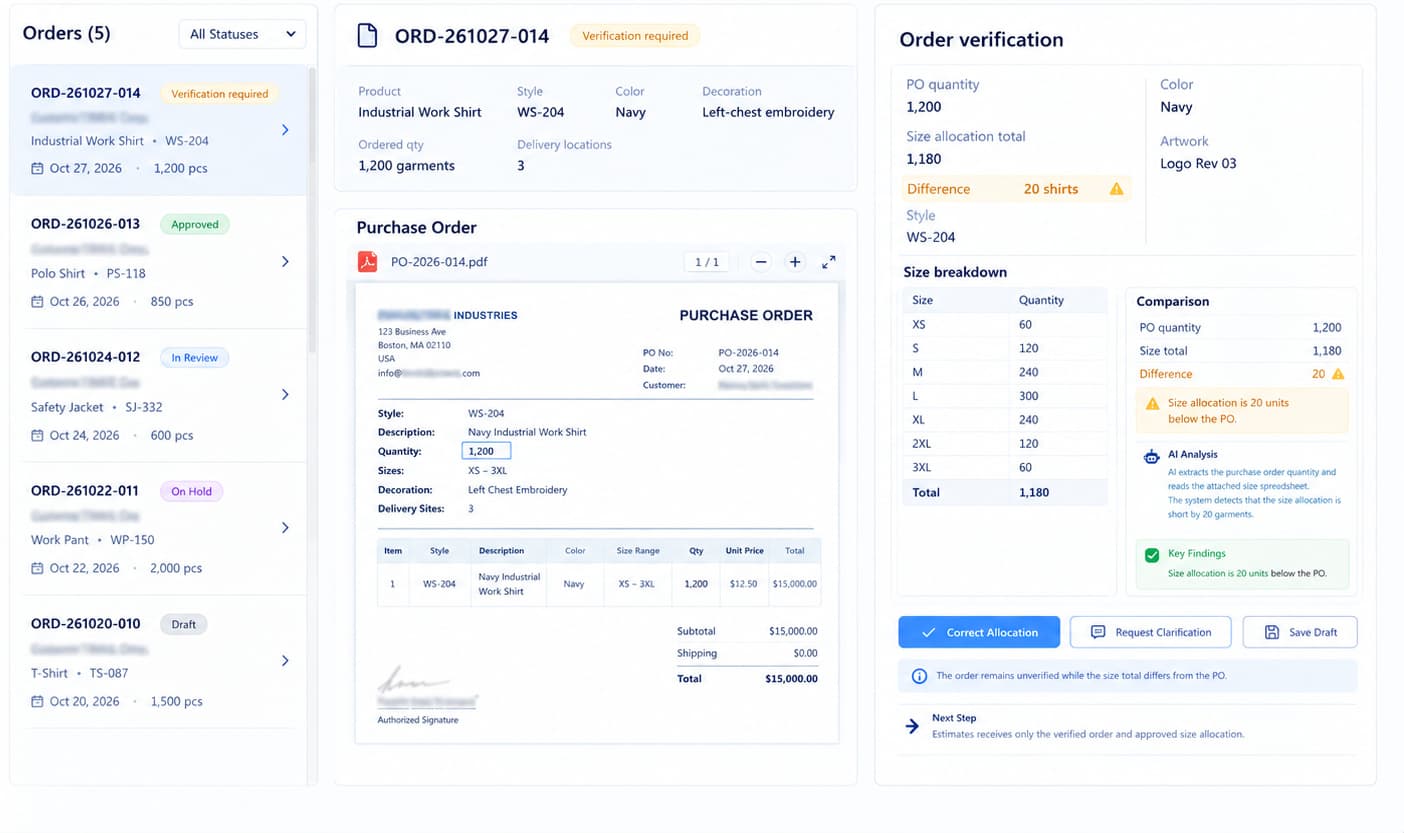
20 shirtsPO 1,200 VS SIZE TOTAL 1,180
Accurate Order Intake
In the sample workflow, AI compares a 1,200-shirt purchase order with its size breakdown and flags the 20-shirt difference for merchandiser review before manufacturing.

Custom Apparel Manufacturers
Uniform & Workwear Suppliers
Embroidery & Decoration Teams
Your central command center for customer orders, material readiness, production planning, quality release, fulfillment and settlement.
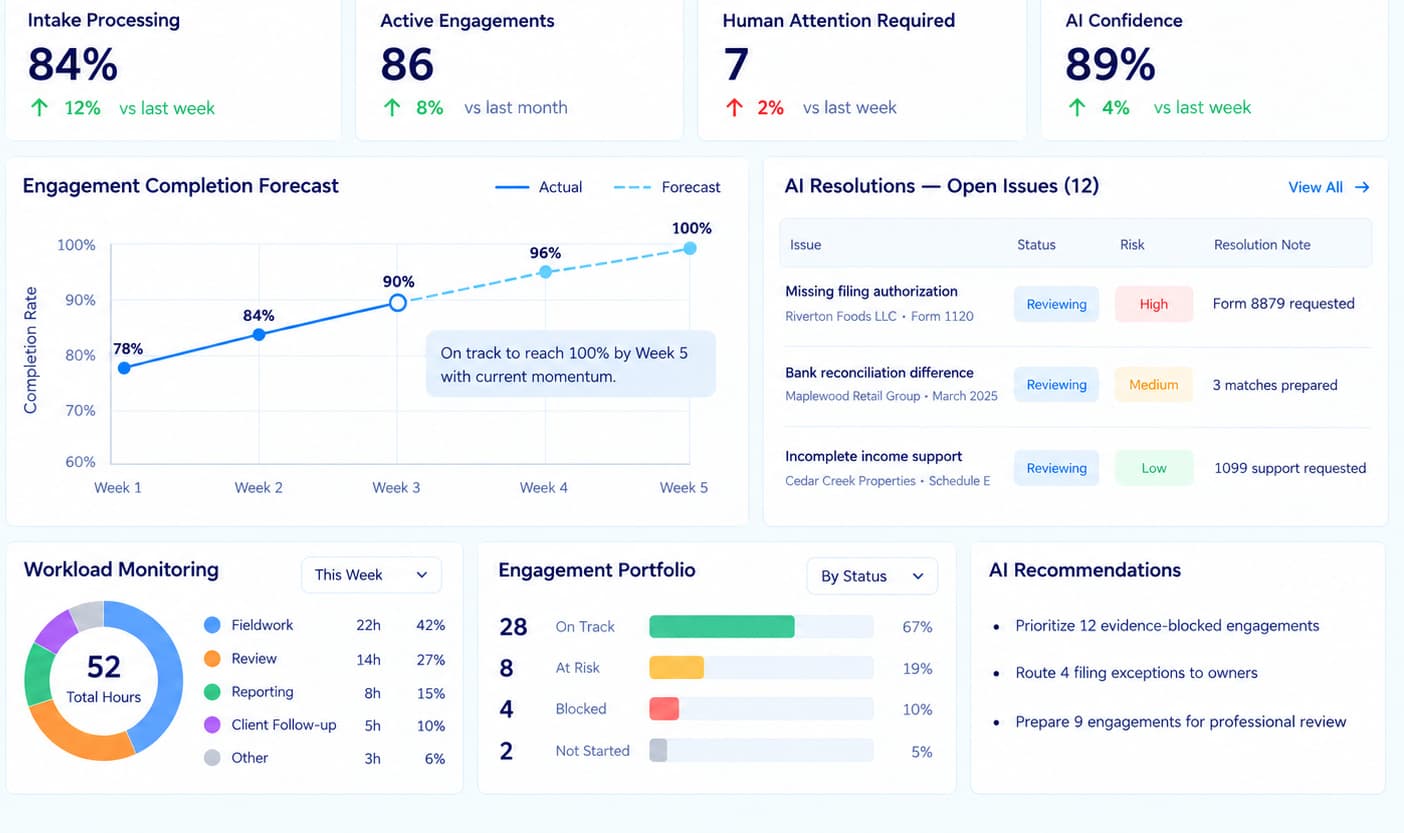
Compare actual completion with the forecast line to see whether work is on track to reach 100% by Week 5.
Compare actual completion with the forecast line to see whether work is on track to reach 100% by Week 5.
Your central command center for customer orders, material readiness, production planning, quality release, fulfillment and settlement.
Kezvorynth AI connects customer purchase orders, garment specifications, fabric and trim records, production bundles, quality inspections, packing and settlement into one operational workflow. AI highlights potential production delays, material shortages and quality concerns using recorded operational evidence. Teams can review supporting evidence, investigate exceptions and make informed decisions, with authorized personnel approving production, quality and dispatch.
Book a demo ↗In the sample workflow, AI compares a 1,200-shirt purchase order with its size breakdown and flags the 20-shirt difference for merchandiser review before manufacturing.
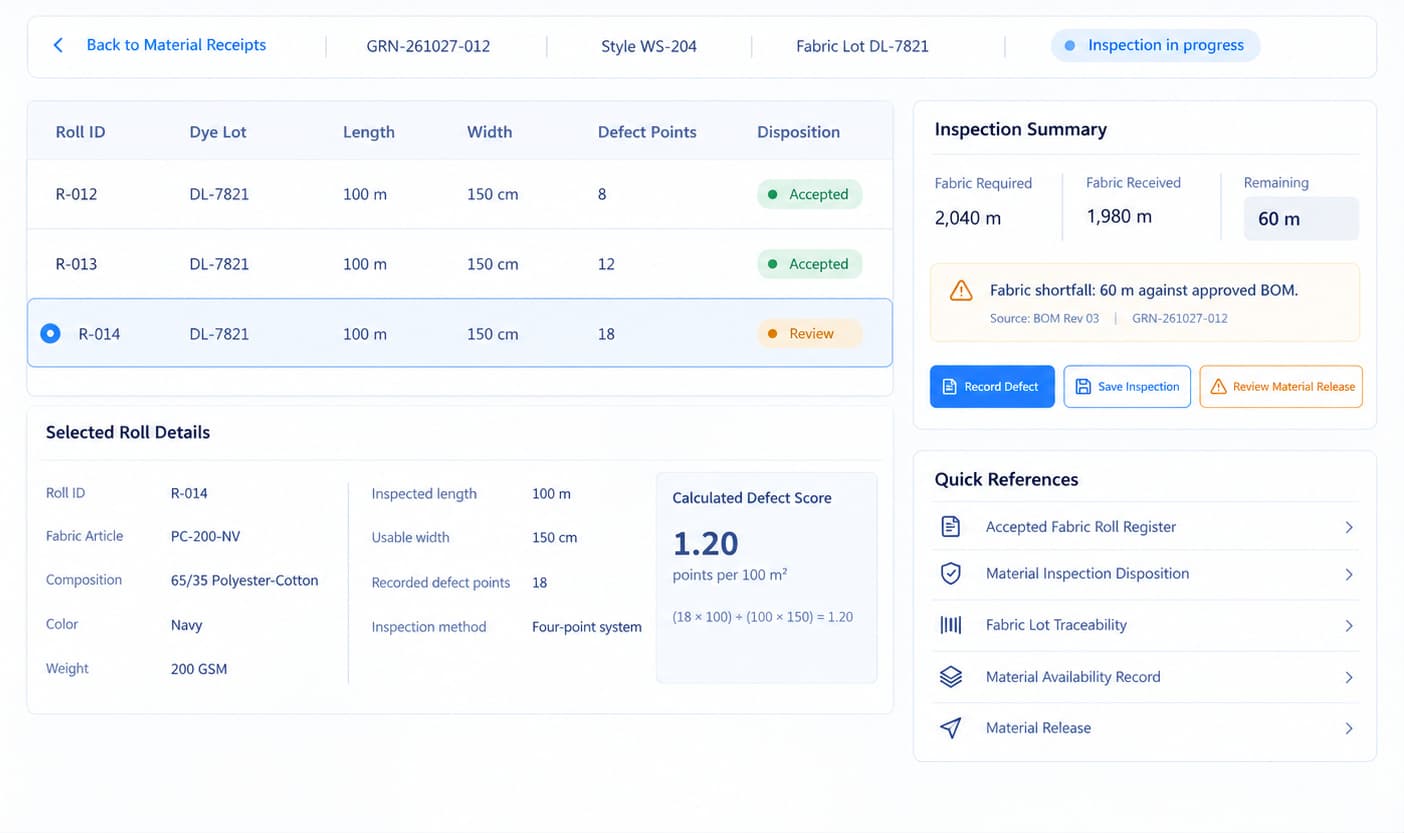
Fabric received (1,980 m) is reconciled with the approved bill of materials (2,040 m), alongside dye-lot and inspection records, so the shortage is visible before cutting begins.
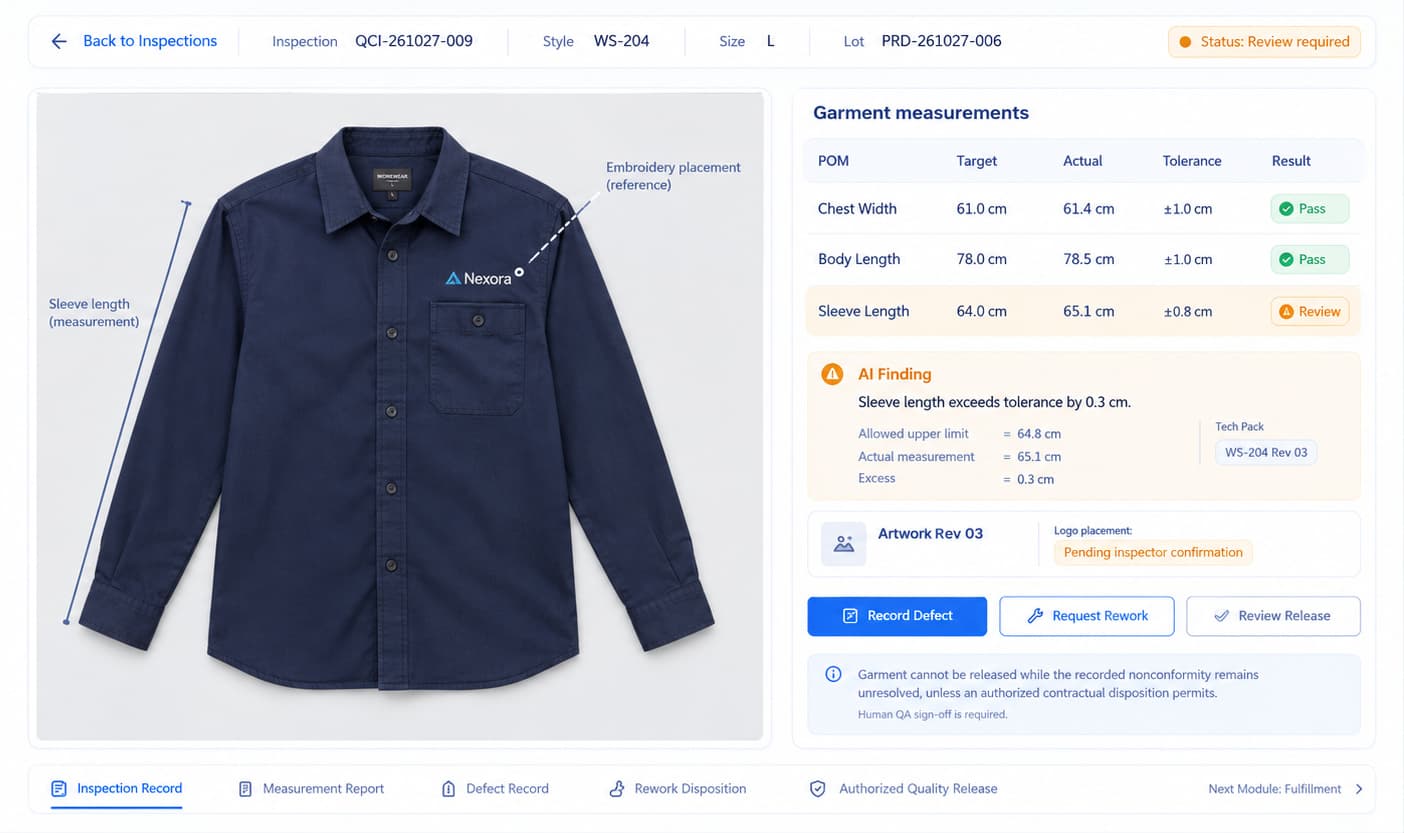
AI calculates that a recorded sleeve length of 65.1 cm exceeds the 64.8 cm limit. Authorized quality personnel decide on rework, acceptance, and garment release.
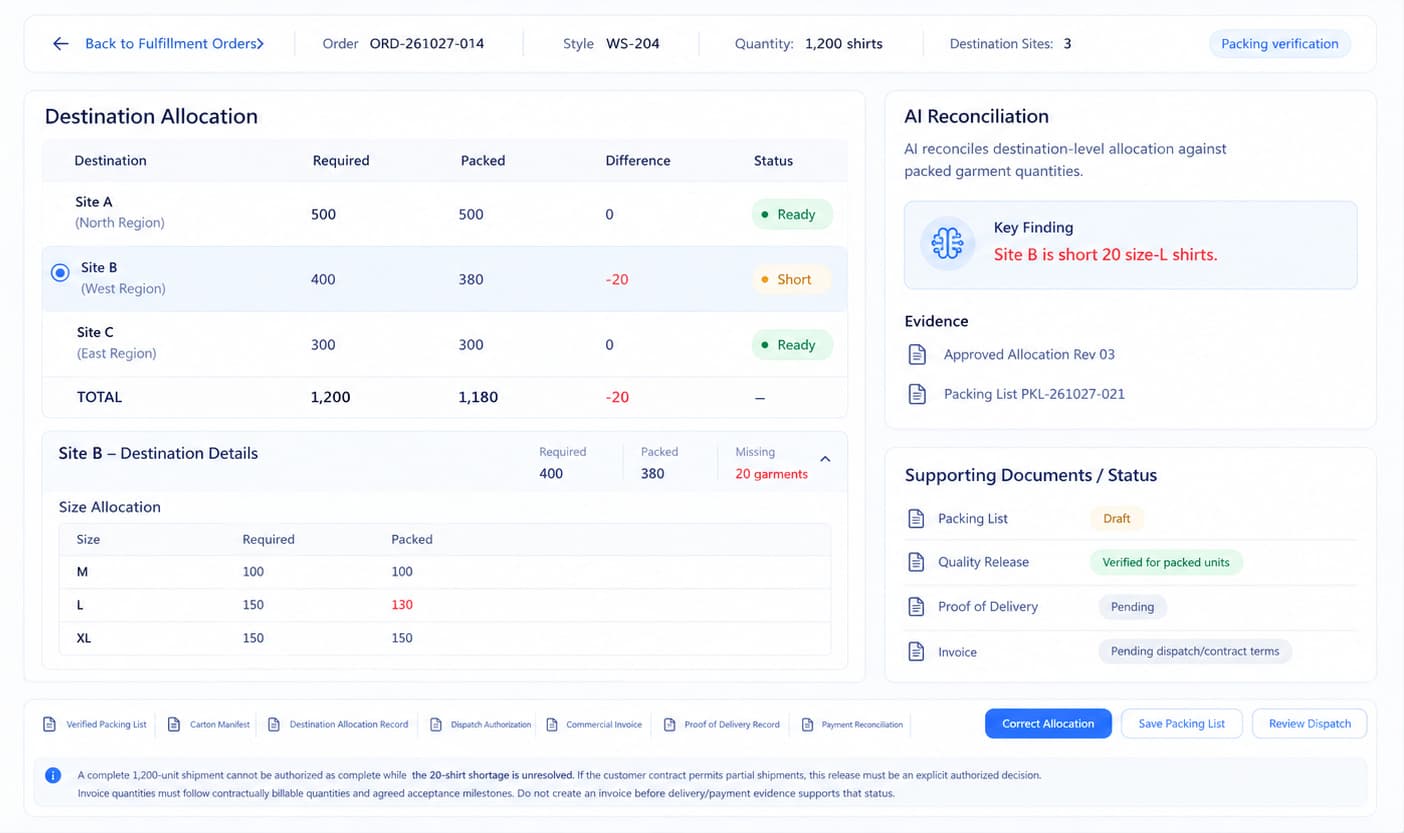
Packed quantities are compared with destination allocations, so a 20-shirt shortage at one site is flagged before the shipment is authorized as complete.
Note: Figures are sample data from the demo workspace (style WS-204, 1,200 shirts), not customer results or guaranteed outcomes. AI assists with evidence review and reconciliation; final manufacturing, quality, and commercial decisions remain with authorized personnel.
Apparel, fashion, and luxury goods businesses move differently, with unique teams, workflows, documents, and decisions. Your tools should be built to work the way your part of the industry does.


Connect customer orders, garment specifications, material verification, production scheduling, manufacturing, quality inspection, and fulfillment through one coordinated operating system.
Production Visibility Across Every Order
View active garment orders, daily manufacturing output, quality holds, material availability, and committed completion dates.
Accurate Orders Before Manufacturing
Turn customer purchase orders and garment requirements into verified manufacturing instructions before materials are purchased or production begins.
Reliable Garment Specifications and Costing
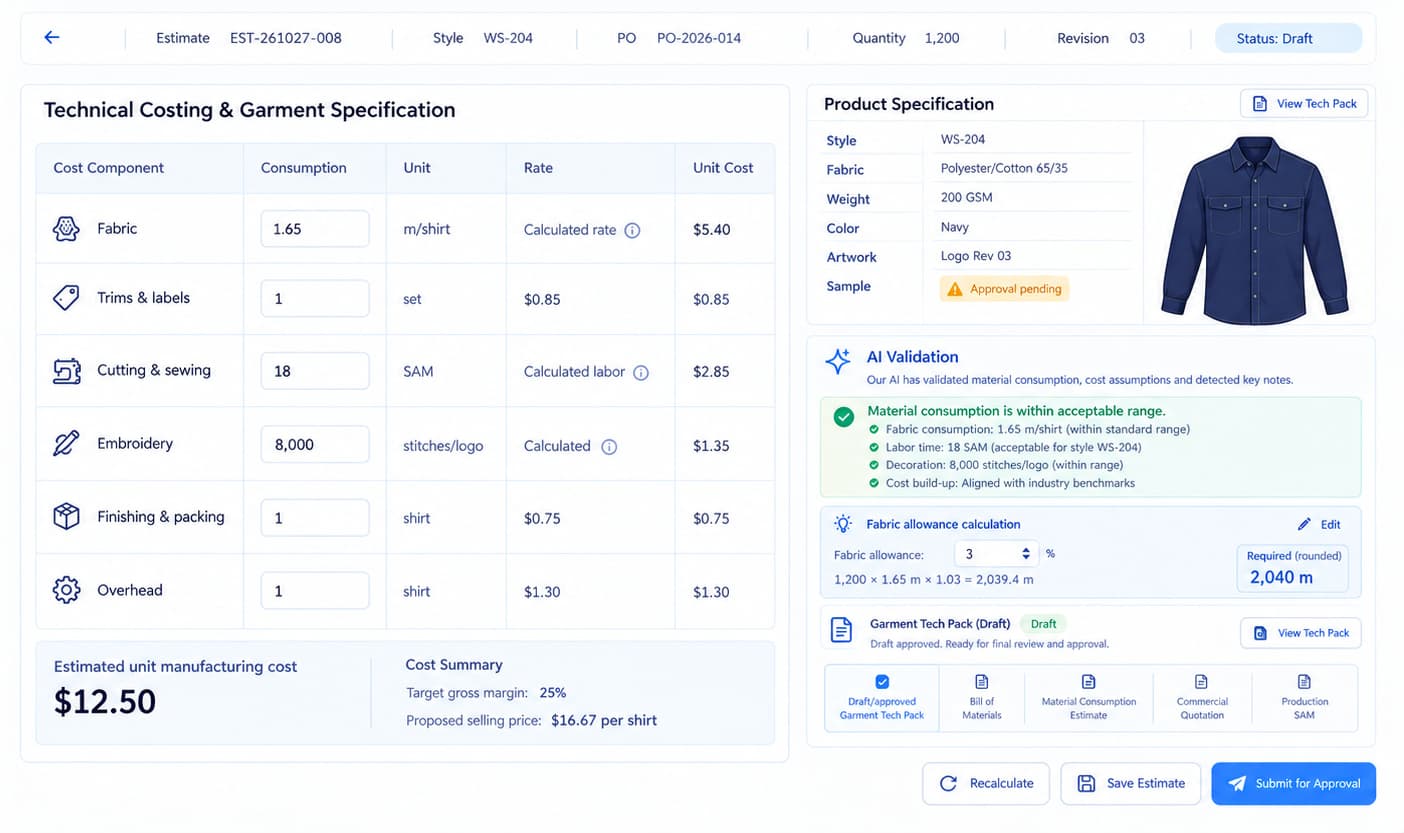
Connect garment technical requirements with fabric consumption, labor, decoration costs, approved samples, and commercial quotations.
Verified Materials for Reliable Production
Maintain control over fabric receipts, supplier lots, inspection records, shade approval, and accepted material availability.
Production Scheduling Around Real Capacity
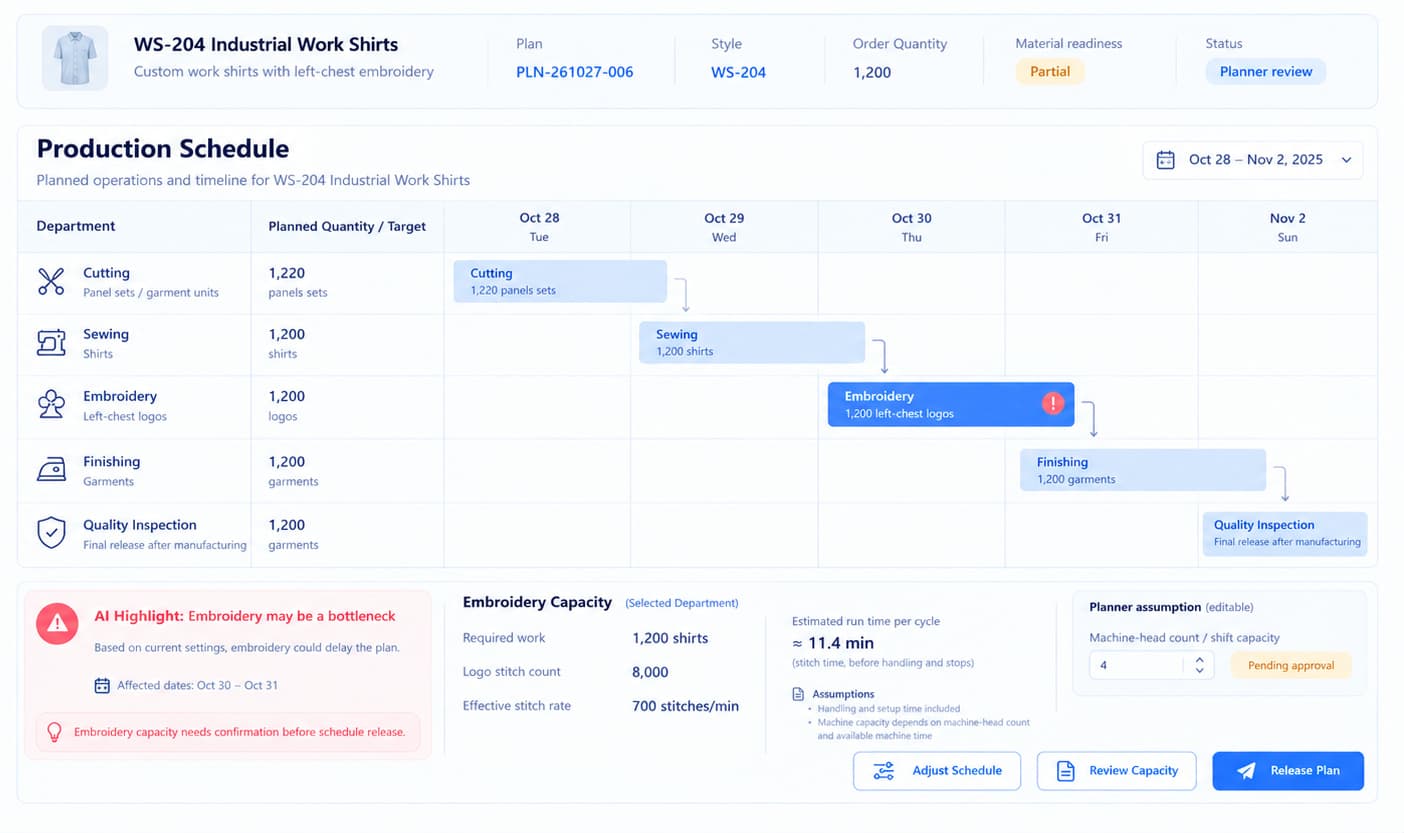
Coordinate manufacturing assignments using actual material readiness, garment production standards, machine availability, and customer delivery commitments.
Traceable Garment Manufacturing
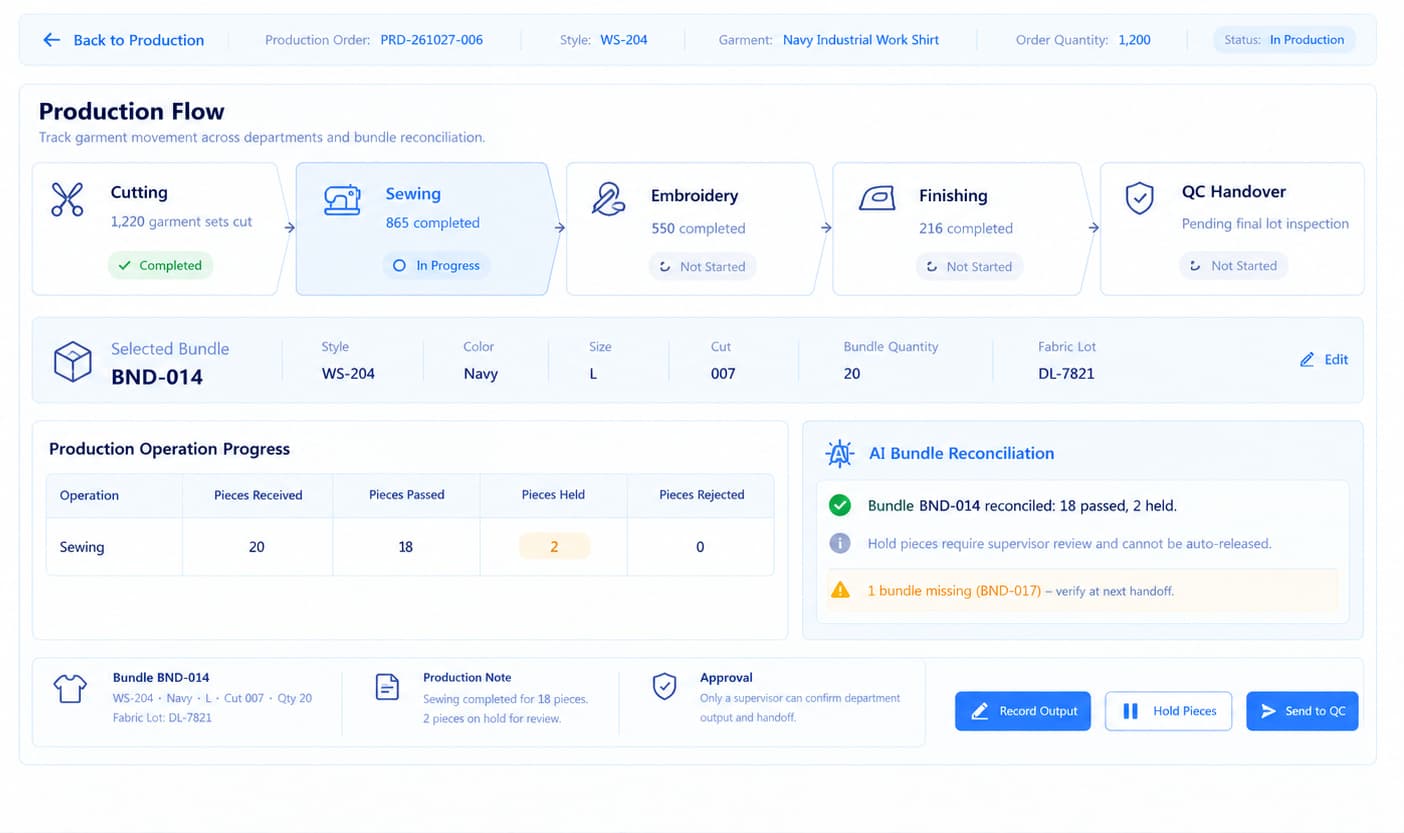
Record physical garment production from cutting bundles through sewing, decoration, finishing, and rework.
Inspection Evidence Before Garment Release
Verify finished garments against approved measurements, construction requirements, artwork, and customer acceptance criteria.
Accurate Packing, Delivery, and Settlement
Reconcile approved garment quantities with customer destinations, carton contents, dispatch documentation, and commercial records.

Orders verifies customer purchase orders, size allocations, artwork, and delivery requirements. Estimates prepares approved garment specifications, material requirements, and quotations before production.
Materials reconciles supplier deliveries with approved requirements, tracks fabric rolls and dye lots, records inspection findings, and identifies shortages before manufacturing.
Planning schedules cutting, sewing, and embroidery. Production tracks garment bundles and manufacturing output, while Quality reviews measurements, workmanship, and defects before authorized release.
Fulfillment verifies packing quantities, garment sizes, customer destinations, and dispatch records. Delivery evidence, invoices, and payments are reconciled according to agreed commercial terms.
Use a platform designed to harness the best intelligence available for the work in front of you. Kezvorynth AI connects specialized AI capabilities with real garment operations, from order verification and material traceability to production, quality release, fulfillment, and settlement. Every recommendation is grounded in operational evidence and remains subject to authorized human review.
Disconnected purchase orders, fabric records, production bundles, inspection documentation, shipment details, and invoices create manual handoffs and limited operational visibility.
Extract styles, colors, size breakdowns, quantities, artwork references, and delivery requirements from customer purchase orders. AI structures requirements, flags missing details, and prepares verified information for Estimates.
Review tech-pack specifications, bills of materials, fabric consumption, and revision changes. AI highlights discrepancies and missing technical requirements for authorized merchandiser review.
Read supplier purchase orders, goods receipts, and fabric-roll and dye-lot records to extract quantities and identifiers. AI-assisted matching flags missing inspection evidence and discrepancies before material acceptance.
Analyze material availability, work-center capacity, and cutting, sewing, and embroidery output. AI highlights capacity bottlenecks, missing quantities, and potential delays before garments move to Quality.
Interpret inspector-recorded measurements, workmanship observations, and approved specifications. AI calculates deviations and flags missing evidence for authorized quality review and release decisions.
Compare quality-released quantities, destination allocations, packing lists, dispatch records, invoices, and payments. AI highlights quantity mismatches, missing documentation, and commercial exceptions for review.
Note: AI providers and model trademarks belong to their respective owners. Model assignments represent proposed implementation choices and do not imply active integrations, certifications, partnerships, or endorsements.
Kezvorynth AI brings together customer purchase orders, garment specifications, fabric and trim records, production bundles, quality inspections, packing, shipments, and financial systems. Connect your existing business tools to support accurate data flow from verified order to authorized shipment—reducing duplicate entry and improving garment traceability.
Note: Tool names and marks belong to their respective owners. No endorsement or partnership implied.
From purchase order verification and garment costing to fabric traceability, production exceptions, quality inspection, and shipment reconciliation—AI assistance connected to real manufacturing records.
Task-specific AI capabilities verify orders, reconcile material records, identify production discrepancies, and support quality and fulfillment decisions using documented operational evidence.
AI findings depend on available operational records. Production, quality, and shipment decisions remain subject to authorized personnel review.
Support garment inspection, material traceability, labeling verification, and applicable protective-workwear documentation through controlled operational records.
Record garment measurements, workmanship defects, inspection findings, and authorized acceptance decisions against approved specifications.
Support contract-specified garment sampling and inspection records using applicable plans, including ISO 2859-1 or ANSI/ASQ Z1.4 where required.
Maintain fabric-roll, supplier-lot, dye-lot, inspection, and material-release references throughout garment production.
Compare garment labels, size information, care instructions, and approved branding against product and customer requirements.
Track applicable material tests, conformity documentation, approved components, and qualified inspection decisions for protective garments.
Preserve documented inspection dispositions and authorized approvals before nonconforming or unverified garments enter fulfillment.
Note: Kezvorynth AI supports operational documentation and evidence review. Compliance with applicable laws, standards, customer specifications, testing requirements, and certification obligations remains the responsibility of authorized manufacturers, inspectors, and competent conformity-assessment bodies.
Kezvorynth AI can use records captured through compatible barcode and identification hardware to support fabric-roll traceability, garment bundle verification, production handoffs, and carton-level fulfillment.
Captures movements of appropriately RFID-tagged garment cartons and pallets during warehouse receiving and dispatch. Recorded scans can support carton identification, destination verification, and shipment reconciliation.
Scans labeled fabric rolls, cutting bundles, finished garment cartons, and inventory locations. Supports material identification, production quantity reconciliation, and packing verification.
Note: Hardware, installation, and integration are not included in the standard subscription. Additional charges apply based on the hardware selected, integration modules required, and implementation scope.
Starting at $200/mo
Orders, Estimates, Materials, Planning, Production, Quality, and Fulfillment in one coordinated platform. Built around garment specifications, manufacturing operations, traceability, and delivery commitments.
One-time onboarding prepares your customer orders, garment specifications, bills of materials, supplier and fabric records, production routings, quality inspection plans, packing and invoicing data before your first subscription cycle. These are starting fees; final scope depends on integrations, data volume, security, compliance requirements, deployment, and rollout needs.
From $1,000+
One-time feeFrom $2,500+
One-time feeEverything in Essential, plus:
From $5,000+
One-time feeEverything in Plus, plus:
Run Kezvorynth AI wherever your catalog data, order streams, and inventory records are allowed to live. The subscription price is identical either way.
Runs in Nestack's managed cloud — nothing to provision. The fastest way to get your operations live and running.
The same platform deployed inside your own infrastructure — your cloud, VPC or on-prem — for apparel manufacturers with strict customer-artwork, order data or compliance mandates. Order, specification, production, and payment data never leave your environment, and the platform subscription stays the same.
Note: The subscription is identical on either model; only the onboarding scope differs by your security and deployment requirements.
Answers to common operational questions from custom apparel manufacturers, uniform suppliers, production managers, and quality teams.
Book a demo ↗It compares customer purchase orders with size allocations, garment specifications, artwork references, and delivery requirements. Quantity differences or missing approvals are flagged for merchandiser review before production instructions are finalized.
Yes. It can reconcile ordered quantities against uploaded size-allocation records and identify mismatches. The responsible employee must verify and approve the corrected allocation.
Estimates use approved fabric consumption, trims, cutting and sewing labor, embroidery costs, finishing, overhead, and target gross margin. The calculations remain linked to the applicable technical specifications and assumptions.
Materials records retain supplier references, goods receipt details, fabric-roll identifiers, dye lots, inspection findings, and material-release decisions for downstream production verification.
Planning evaluates approved garment requirements against available work-center capacity, machine assignments, and recorded throughput. Potential conflicts can be identified and reviewed before the production planner authorizes changes.
Production records capture bundle quantities, completed pieces, held garments, rejects, and department handoffs. Differences can be flagged so supervisors can investigate missing or incorrectly recorded pieces.
AI can calculate deviations from inspector-recorded measurements and assist with identifying visible defects from suitable images. Physical measurements, inspection judgments, and final garment acceptance remain under authorized quality personnel.
No. The platform supports review and traceability of relevant conformity evidence, but certification and protective-performance decisions require applicable testing, authenticated documentation, and authorized qualified personnel.
Fulfillment compares quality-released quantities against approved size and destination allocations, packing lists, and carton records. Packing shortages or allocation discrepancies are flagged before complete-shipment authorization.
Yes. It supports comparison of dispatch quantities, delivery evidence, invoices, deposits, credits, and outstanding balances according to the agreed customer contract and authorized accounting records.