Healthcare Insurance Technology

Your claims lane, finally calm.
Every member accounted for.

Qavreniq AI runs eligibility, authorizations, claims intake, adjudication, quality review, settlement and compliance in one operating layer. Each module keeps source evidence, review state and staff approval visible as work moves from coverage to payment.

Source-linked evidence

Human-reviewed actions and visible audit history

A claims analyst reviewing an eligibility screenA payer and provider agreeing on terms across the deskA utilisation-management reviewer at her workstation

Built for payer operations, review and finance teams

A healthcare-insurance operations lead reviewing a claim at her workstation
  • Eligibility
  • Prior Auth
  • Claims Intake
  • Adjudication
  • 835 Remittance
  • EFT / ERA
  • CMS-1500
  • UB-04
  • ICD-10
  • HIPAA
  • CAQH CORE
One screen

Coverage, claims, settlement and compliance — together.

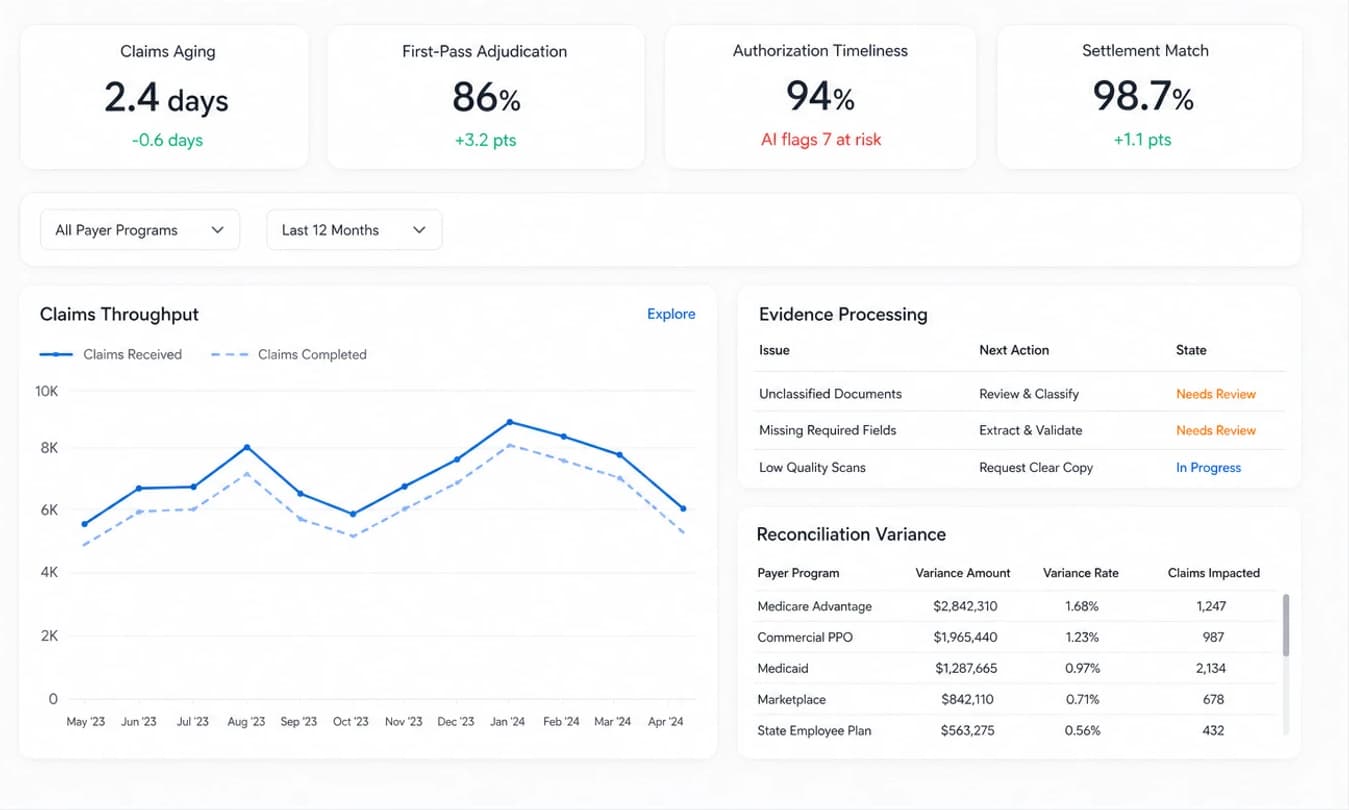
Qavreniq AI runs the whole insurance operating lane from member eligibility through 835 reconciliation. Aging, first-pass adjudication, authorization deadlines and payer variance sit on one surface — so your leads work from one picture, not six.

Qavreniq AI — operations dashboard with claims aging, first-pass adjudication, claims throughput, reconciliation variance and the operational signal AI panel
7
Workflow modules
Eligibility through Compliance
4
X12 transaction families
270/271 · 278 · 837 · 835
2
Deployment options
Cloud or private / self-hosted
1
Review history
Source-linked and human-controlled
An operations desk with a laptop and claim notes, where the morning exception queue gets reviewed
Operational signal

“Rising remittance mismatches on institutional claims. Clinical evidence gaps are concentrated in urgent-outpatient authorizations, and document-source conflicts are driving the largest intake rework segment.”

Written back to your operations leads every morning, in the same payer programs and transaction sets they already work in.

Nestack healthcare suite

Built for every corner of modern healthcare.

Healthcare moves differently in every care setting. Explore 11 focused AI platforms built around the teams, services, and outcomes that define each part of the industry.

Healthcare Services

Tamvoriq AI

Coordinate outpatient operations, patient access, documentation, and follow-up from one care-delivery workspace.

Outcome

More consistent ambulatory care

Digital Health Platforms

Qevarynth AI

Turn virtual-care activity into coordinated patient journeys, timely interventions, and measurable service outcomes.

Outcome

Connected virtual care

Healthcare Recruitment Services

Klyqorent AI

Help healthcare staffing teams match qualified candidates to open roles and keep placements moving with less delay.

Outcome

Faster clinical hiring

Mental Health Services

Serenqora AI

Support intake, care coordination, engagement, and outcome visibility across behavioral and mental-health services.

Outcome

Continuity across care journeys

Hospital & Acute Care Health Systems

Qelvuxarn AI

Give hospital teams a shared view of clinical operations, capacity, patient flow, and service-line performance.

Outcome

Safer, smoother hospital operations

Home Health Services

Pryqelva AI

Coordinate referrals, visits, care plans, and patient follow-up for skilled home-health teams in the field.

Outcome

Reliable care at home

Senior Living & Elder Care

Elyqentra AI

Help senior-living teams coordinate resident needs, family communication, staffing, and daily service delivery.

Outcome

Responsive resident support

Behavioral Health Services

Veqthorin AI

Bring referrals, appointments, treatment progress, and care-team priorities into one behavioral-health view.

Outcome

Better-informed behavioral care

Dental Products & Services

Occluvaryn AI

Connect patient intake, treatment acceptance, scheduling, and multi-site dental operations around the next best action.

Outcome

Stronger dental-care delivery

Healthcare Management & Consulting

Averqentra AI

Translate healthcare transformation priorities into visible initiatives, accountable decisions, and measurable results.

Outcome

Execution-ready transformation

Health & Wellness Services

Serevance.AI

Personalize wellness journeys, coordinate client engagement, and help care teams act on meaningful health signals.

Outcome

Personalized wellness engagement

The modules

How Qavreniq AI runs the claims lane

Seven modules, one operating layer — Eligibility through Compliance. Each one works in the payer programs, transaction sets and code families your team already lives in.

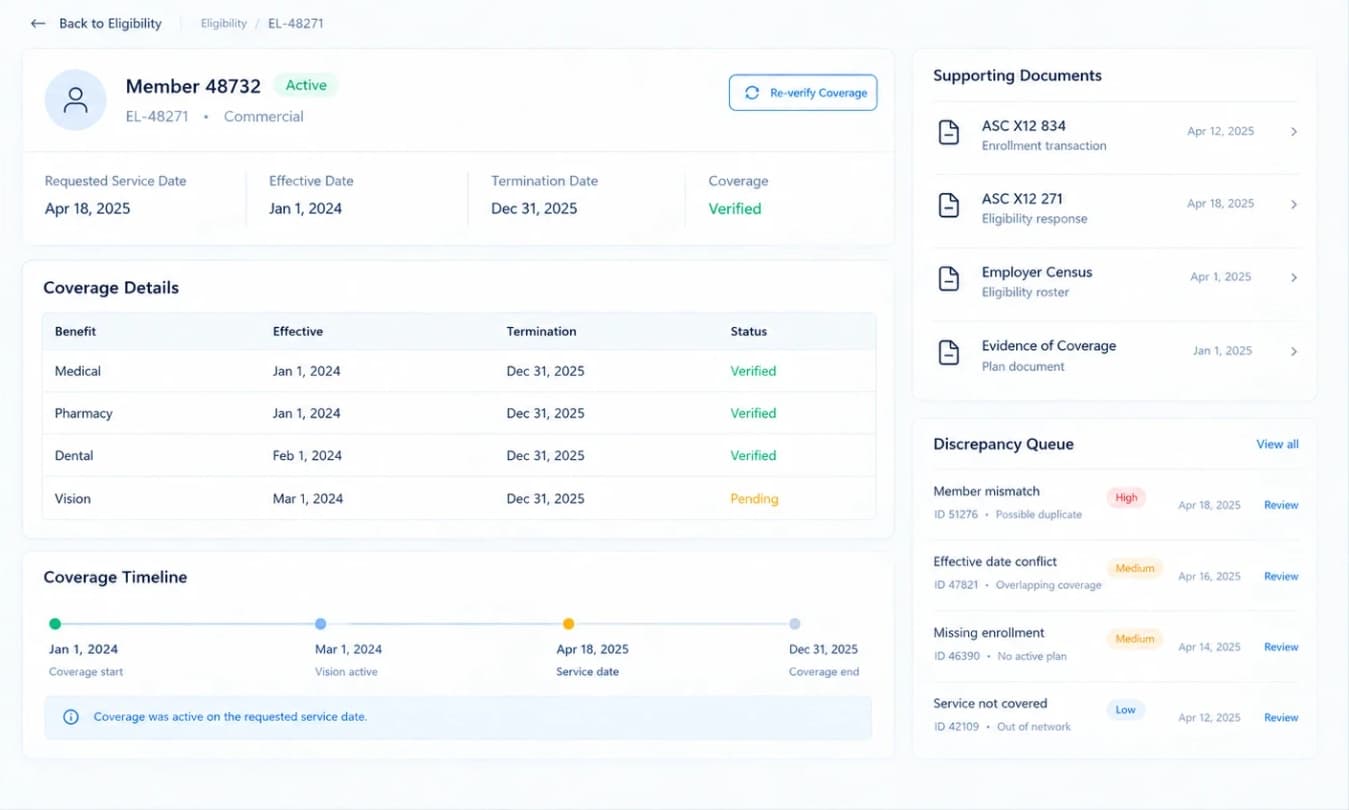
Qavreniq AI — Eligibility workspace with a coverage record, enrollment timeline and effective-date discrepancy queue
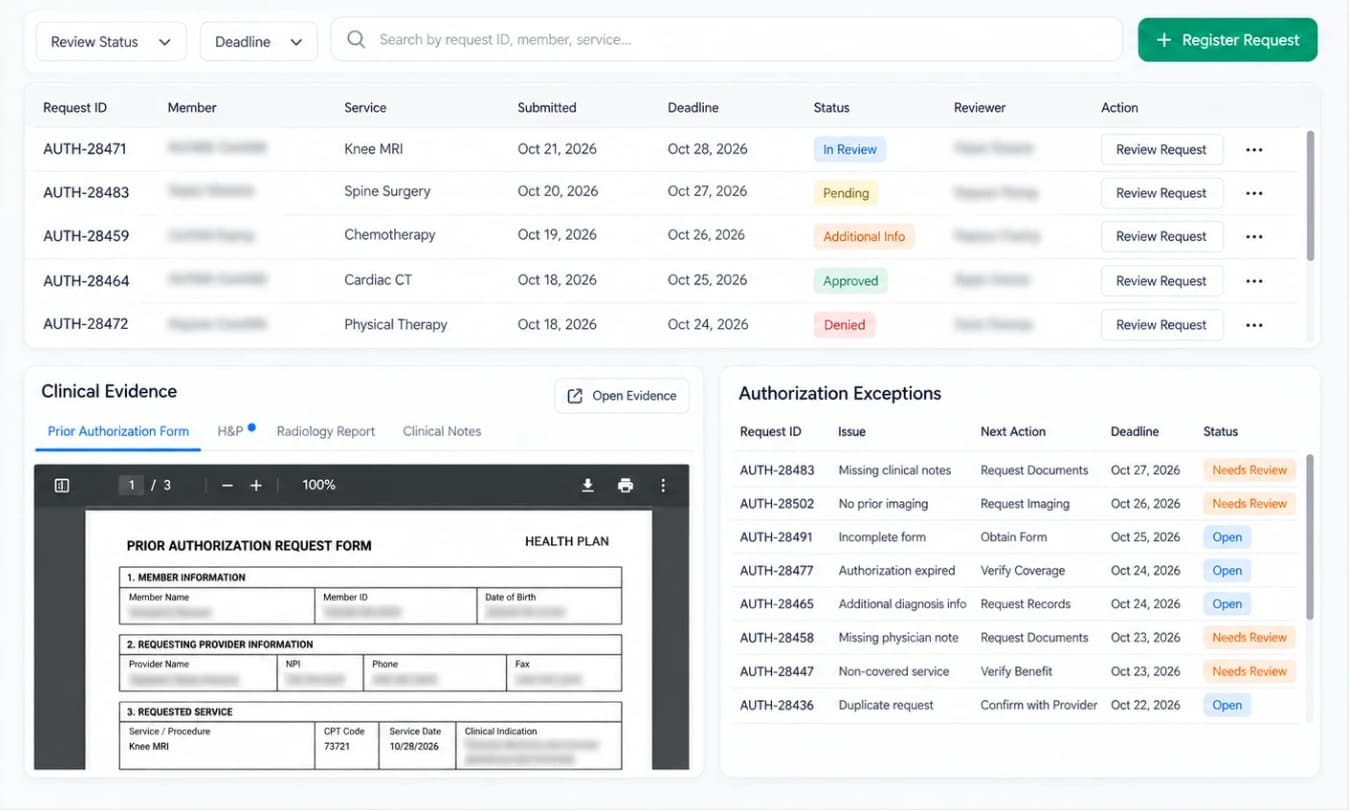
Qavreniq AI — Authorizations board with a request queue, clinical evidence preview and deadline exceptions
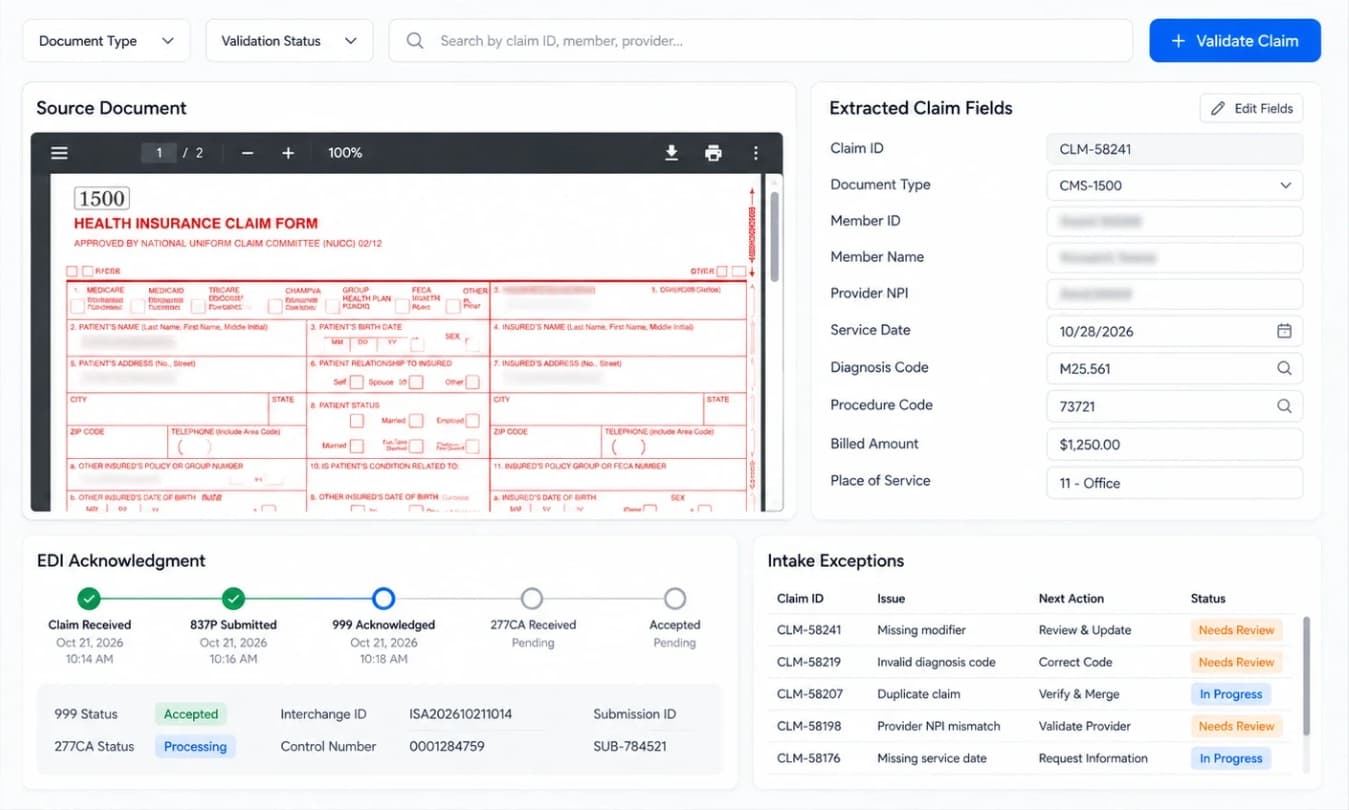
Qavreniq AI — Claims Intake workbench showing a CMS-1500 beside extracted fields, 999/277CA acknowledgments and the correction queue
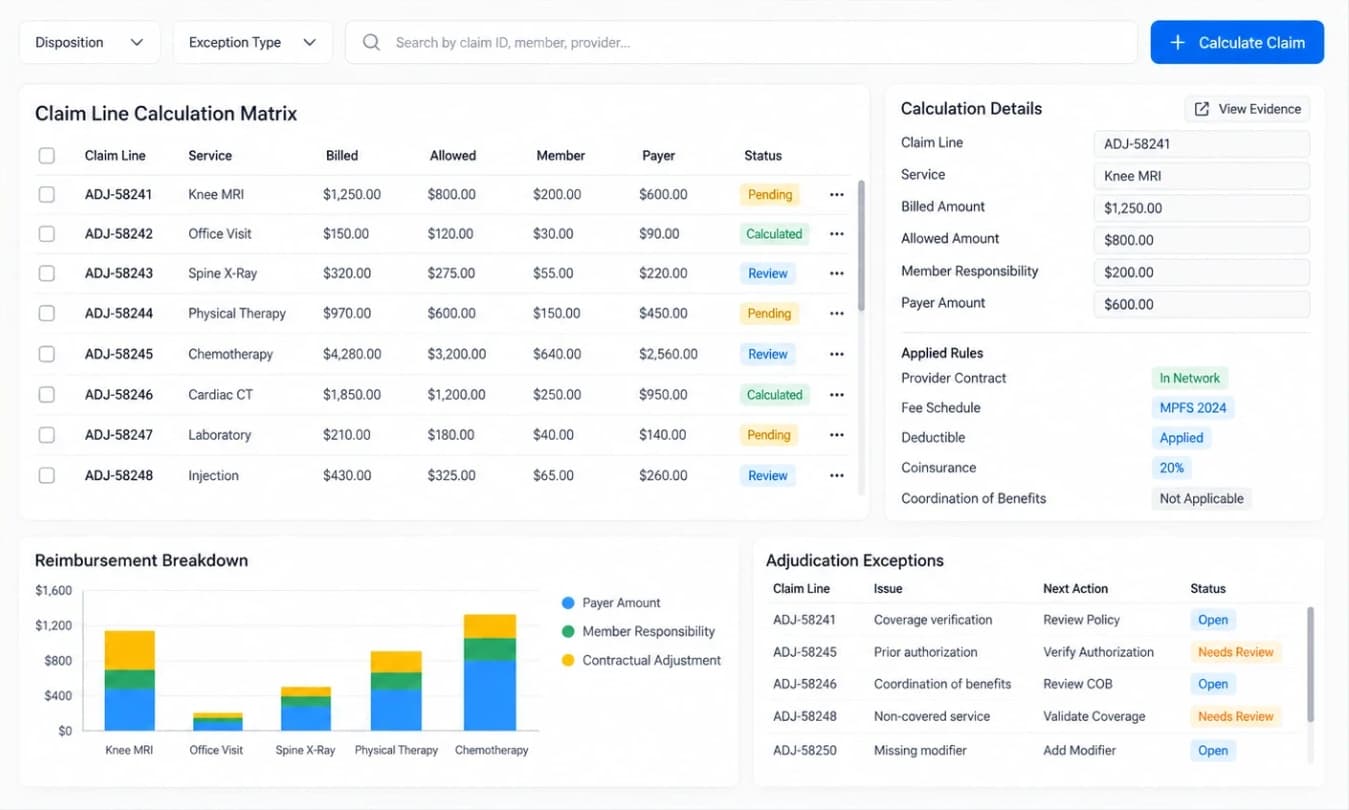
Qavreniq AI — Adjudication calculation matrix with billed, allowed, member responsibility and payer liability per line
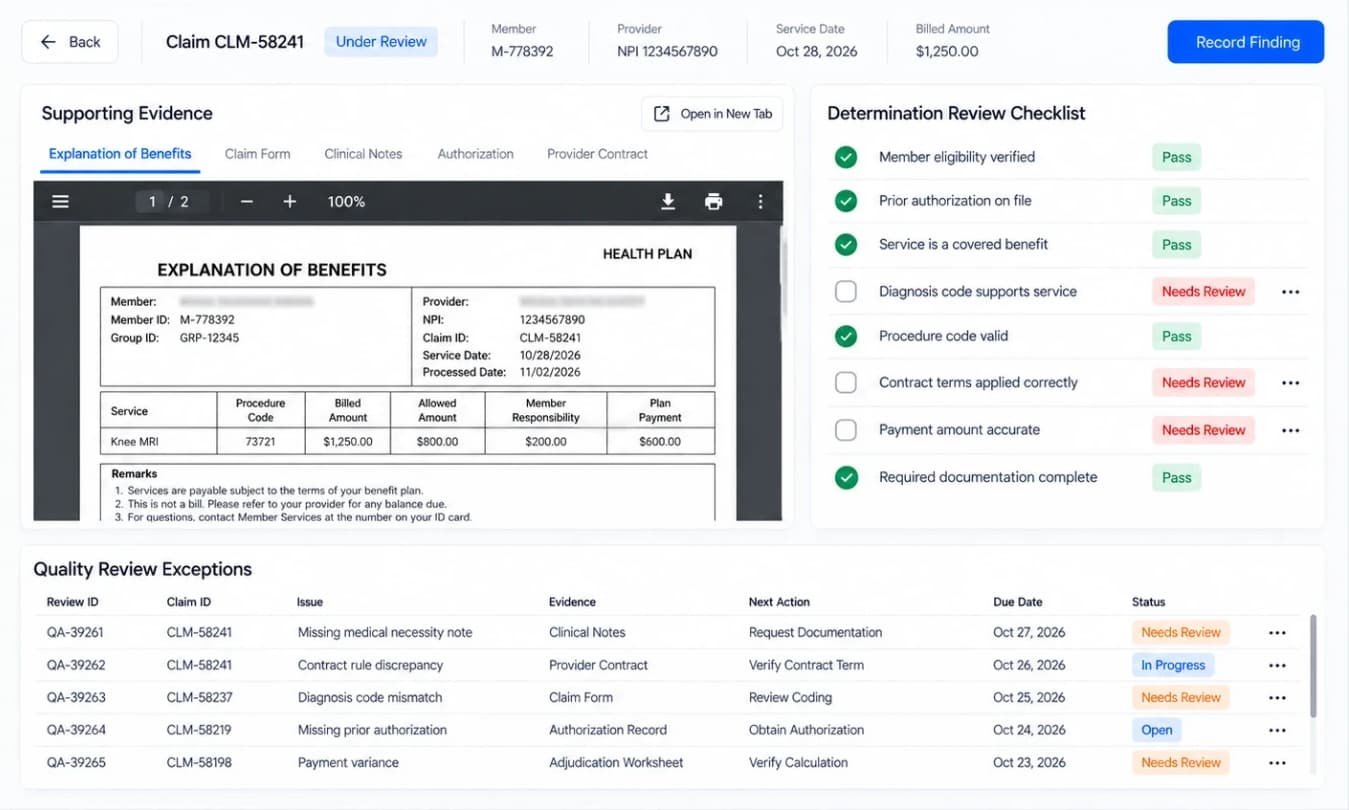
Qavreniq AI — Quality Review workbench with a determination checklist, source document preview and correction queue
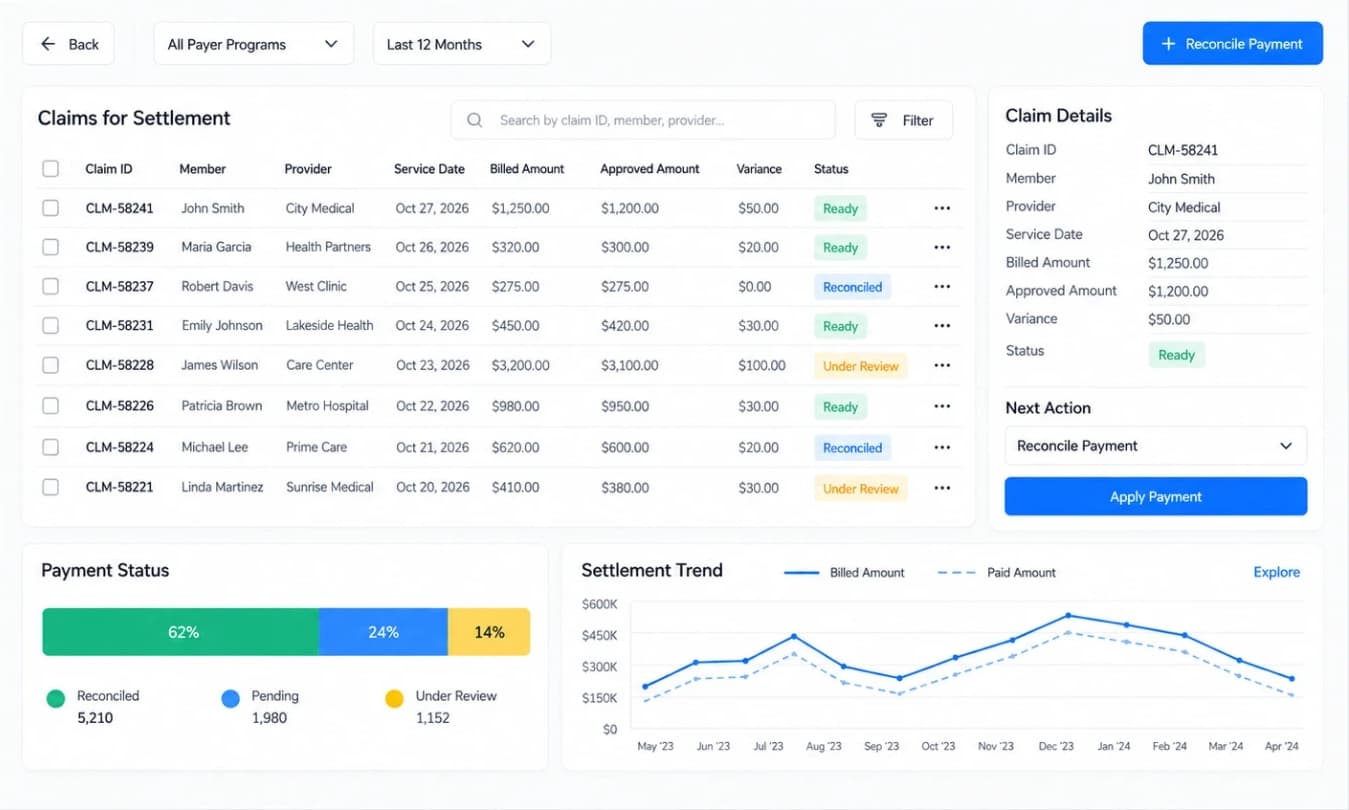
Qavreniq AI — Settlement worklist of approved payment batches, EFT trace references and 835 remittance matches
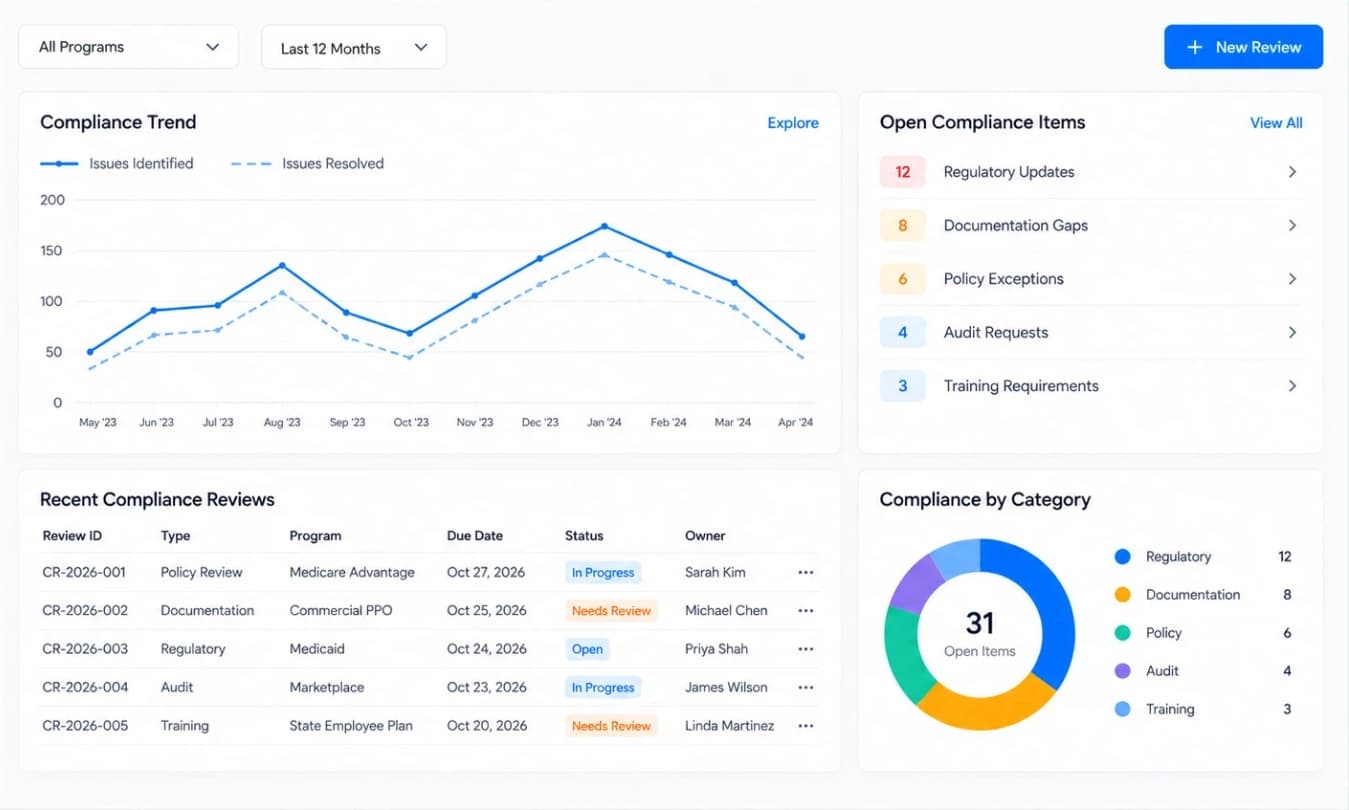
Qavreniq AI — Compliance board of regulatory obligations, evidence verification states, corrective actions and submission controls
02

Eligibility

Verify member enrollment and service-date benefit coverage against the authoritative 834/271 evidence, in one coverage record. Qavreniq flags enrollment-date conflicts beside the affected coverage period so the specialist can resolve the discrepancy from the same screen.

How it works

How Qavreniq is configured and run

Four product-specific steps connect approved sources, establish review controls and keep decisions traceable.

A healthcare-claims reviewer going through a clinical evidence file at her desk

Note: Connection methods, implementation scope and launch timing depend on the selected deployment, source systems and trading partners.

  1. 01

    Choose the deployment boundary

    Run Qavreniq in the managed cloud or in a customer-controlled private environment. Access, data retention and connection scope are confirmed during implementation.

  2. 02

    Connect approved source systems

    Configure the claims, eligibility, service-review, document and remittance sources selected by your team. Production access depends on each source system and trading partner.

  3. 03

    Map the review workflow

    Set the evidence fields, routing rules, roles and approval points for the modules you use. Qavreniq organizes the source material without replacing qualified reviewers.

  4. 04

    Review, approve and audit

    Staff verify proposed matches, extracted fields and evidence comparisons before action. Source links, review state and approval history remain available for audit.

Why the workflow remains reviewable

These controls define how Qavreniq prepares operational work while keeping source evidence and staff authority visible.

A payer operations room — the Monday huddle running down the week ahead

It is organized around payer transactions

Qavreniq workflows support 270/271 eligibility, 278 service review, 837 claims and 835 payment advice. Production interchange requires configured and tested trading-partner connections.

The qualified reviewer still owns the call

Qavreniq organizes evidence, surfaces conflicts and prepares source-linked review material. Qualified staff retain authority over clinical, coverage, payment and compliance decisions.

Deployment follows the approved boundary

Cloud and private deployment options can be configured around customer access, audit and data-handling requirements. Final HIPAA responsibility depends on the complete implementation, policies and agreements.

Source-linked

Each proposed action stays connected to the document, transaction or rule used for review.

Human-controlled

Qualified staff verify and approve clinical, coverage, payment and compliance actions.

Auditable

Review state, corrections and approvals remain visible in the workflow history.

Built-in AI capabilities

AI that turns evidence into resolved work

Qavreniq AI helps payer teams move from coverage evidence to a reviewed determination, reconciled payment, and audit-ready record. It prepares the work; authorized people make the decision.

  1. 01

    Resolve coverage exceptions

    Compare enrollment and service-date evidence, identify conflicting effective dates, and place the affected coverage period in front of the right specialist.

  2. 02

    Prepare authorization reviews

    Organize submitted clinical evidence, identify missing documents, and prepare a source-linked record for qualified review.

  3. 03

    Turn claim documents into verified data

    Extract CMS-1500 and UB-04 fields with source anchors, detect duplicate submissions, and send uncertain fields to an intake specialist before adjudication.

  4. 04

    Explain adjudication variances

    Retrieve benefit, contract, and fee-schedule evidence selected for the workflow, then prepare a line-level comparison for examiner review and approval.

  5. 05

    Strengthen quality review

    Check determination rationale against source documents, flag missing evidence, and prepare source-linked summaries for appeals and corrective action.

  6. 06

    Reconcile settlement evidence

    Match approved payment batches to 835 remittance and EFT traces, explain unmatched lines, and keep release decisions with authorized finance staff.

  7. 07

    Keep compliance work audit-ready

    Track obligations selected by the customer, associated evidence and corrective actions in one queue while surfacing documentation gaps for compliance-officer review.

Note: Every suggestion keeps its source evidence and review state attached. Eligibility changes, authorization decisions, claim dispositions, quality findings, and payment releases remain under human control.

Compliance

Built to the rules you are already held to

Healthcare insurance runs on evidence that has to be exactly right. Qavreniq AI is designed around the regimes below — here is what it supports, and what each one actually covers.

  • HIPAA

    Health Insurance Portability and Accountability Act

    Qavreniq can be configured to support access control, audit and transmission safeguards for ePHI. HIPAA compliance depends on the complete deployment, risk analysis, policies and agreements—not the application alone.

  • ASC X12

    ASC X12 HIPAA EDI Transaction Sets (270/271, 278, 837, 835)

    The product workflow model supports 270/271 eligibility, 278 service review, 837 claims and 835 payment advice. Production interchange requires licensed specifications plus trading-partner implementation and testing.

  • CAQH CORE

    CAQH Committee on Operating Rules for Information Exchange

    Qavreniq can support CORE-aligned eligibility, prior-authorization and payment/remittance workflows where the required connectivity and operating rules are configured. Certification is not implied.

Note: These standards are compatible workflow and safeguard references, not product certifications or legal guarantees. Final compliance depends on configuration, licensed specifications, trading-partner testing, customer policies and the complete deployment environment.

Hardware add-ons

Compatible scanners for intake desks

Two optional device categories for Windows intake workstations. Each requires a current WIA driver and deployment testing before scanned evidence can enter the appropriate review workspace.

Insurance Card & ID Scanner

Insurance Card & ID Scanner

A generic USB image scanner can support member-card and ID capture on a Windows intake workstation when a current WIA driver and an approved local capture path are available. Staff verify the source image and extracted fields.

Claims Document Scanner

Claims Document Scanner

A generic automatic-document-feeder scanner can support CMS-1500, UB-04 and supporting-page capture when its current Windows WIA driver and local capture path pass deployment testing. OCR candidates retain the source image for staff verification.

Note: Illustrative hardware categories only; not sold or certified by us. Compatibility depends on a supported Windows WIA driver, maintained vendor software, operating-system configuration, and deployment testing. A scanner does not make a workflow HIPAA compliant: organizations remain responsible for access controls, auditability, workstation security, secure transmission, and device/media controls.

Connectivity

Your whole payer operations stack, connected.

Qavreniq AI connects claims, benefits, clinical review, clearinghouses, payment, analytics, and collaboration systems. Evidence moves through governed APIs and healthcare transaction standards—without manual re-keying between modules.

Platforms & services
  • HealthEdge HealthRules
  • TriZetto Facets
  • TriZetto QNXT
  • Epic Tapestry
  • Availity
  • Change Healthcare
  • Waystar
  • Salesforce Health Cloud
  • Snowflake
  • Databricks
  • Microsoft Teams
  • DocuSign
Transactions & evidence
  • ASC X12 270 / 271
  • ASC X12 278
  • ASC X12 837
  • ASC X12 835
  • CAQH CORE
  • CMS-1500
  • UB-04
  • ACH / EFT traces

Note: Product and company names belong to their respective owners. No endorsement or partnership is implied. Integration availability depends on licensing, API access, vendor approval, security review, and implementation scope.

Pricing

Simple, transparent pricing

One flat monthly price for the whole platform. No per-seat maths, no tiers to decode, nothing switched off behind a plan name.

Flat monthly · every module included

Full platform

Everything Qavreniq AI does, for your whole claims lane — every payer program, every operating team, every transaction set.

Starting at
$200/mo
  • Eligibility
  • Authorizations
  • Claims Intake
  • Adjudication
  • Quality Review
  • Settlement
  • Compliance
Note: AI API usage is charged separately. Clients must recharge their AI credit balance based on usage.
Know more

Talk to us and we’ll tailor the rollout to your payer programs and operating teams.

Onboarding

What your onboarding fee covers

One-time setup covers the agreed Qavreniq AI workspace, roles, source connections and review workflows. Each fee below is a starting point; final scope depends on the deployment, integrations, data volume, security review and compliance requirements.

Essential

$1,000+one-time
  • Kickoff call and go-live plan scoped to your payer programs and operating teams
  • Qavreniq workspace provisioning with claims, authorization and settlement roles
  • Import of your payer directory, fee schedules and contract rules
  • Eligibility 270/271 and Authorizations 278 connected to your clearinghouse
  • Claims Intake tuned to your CMS-1500, UB-04, 837P and 837I templates
  • Role-based access and column-level audit configured for your first users
  • Live-readiness check across eligibility, intake, adjudication and settlement before cutover
  • Onboarding handbook and self-serve help for examiners, reviewers and settlement staff

Plus

Recommended
$2,500+one-time

Everything in Essential, plus:

  • Guided migration of historical determinations, 835 remittances and audit trails, with validation
  • Two integrations with your core claims system, benefits store or clinical review tool
  • Custom determination templates, adjudication rules and 835 reconciliation workflows configured
  • Live training for intake specialists, examiners and UM reviewers, with a recording
  • Dedicated onboarding specialist through your first intake, adjudication and cash close cycle

Enterprise

$5,000+one-time

Everything in Plus, plus:

  • Multi-program rollout plan across every payer, operating team and operating region
  • Bespoke clearinghouse, EHR and bank integrations with API / SSO configuration
  • Bulk migration of legacy member, authorization and claims history with cleansing and reconciliation
  • Role-based training tracks for operations, UM, adjudication and finance teams
  • Named onboarding manager with a defined go-live date and post-launch tuning

Note: Onboarding fees are starting estimates. Final pricing and deliverables are confirmed after scope review; recurring subscription, third-party licenses, vendor fees and AI API usage are separate unless expressly included.

Two ways to run Qavreniq AI

Same platform, same ongoing subscription either way — only where it runs changes.

Cloud (SaaS)

Runs in Nestack’s managed cloud, with hosting, application updates and model infrastructure operated as part of the service. Customer access and data-handling controls are confirmed during setup.

Private / self-hosted

The same platform deployed inside your own infrastructure — your cloud, VPC or on-prem — for teams handling protected health information, clinical evidence and claims. Data boundaries, model access and update responsibilities are defined in the approved deployment architecture.

Note: Cloud and private deployment availability, security responsibilities and data boundaries are confirmed during technical discovery and documented implementation review.

Sister platform — Nestack Agent Care

Healthcare AI agents, monitored for safety

Qavreniq AI keeps payer work connected. Nestack Agent Care adds production monitoring, evaluations, guardrails, human review, and incident response for the AI agents supporting that work.

  • Eligibility, prior-authorization, claims-coding, appeals, and utilization-management agents
  • PHI-aware traces, evaluation thresholds, escalation controls, and documented human overrides

Healthcare production playbook

Run healthcare agents like production systems

The healthcare playbook catalogs failure modes across goals, retrieval, workflows, tools, models, evaluations, guardrails, human review, and outcomes—so drift and unsafe behavior can be detected before they reach live payer operations.

  • Evaluation coverage
  • Guardrail checks
  • Human escalation
  • Incident review

Note: Nestack Agent Care is a separate companion platform. Available monitoring and evaluation controls depend on the deployed agents and agreed implementation scope.

Explore Healthcare AI Agent Playbooks
Common questions

Your questions, answered

The things payers and TPAs ask us before they get started.

1.Will it work with the claims system and clearinghouse we already run?

Qavreniq AI connects read-only to your existing claims system, member/benefits store, clinical review tool and clearinghouse, and works from the EDI feeds that are already there. There is no migration and nothing to rip out — most payers are live within a day, and your team keeps working in the tools they know.

2.How is protected health information handled?

Everything is built around the HIPAA Privacy and Security Rules: records are encrypted at rest and in transit, access is controlled per role, and every read and write is audited at the column level. Qavreniq AI only needs the fields it uses — member, authorization, claim and remittance — and it supports a private-deployment mode where PHI never leaves your own cloud or VPC.

3.How long does onboarding actually take?

Connecting the EDI feeds and the determination history is usually a day. The models want a couple of intake cycles of your own data before their suggestions settle, so most operations judge the numbers at the four-week mark rather than on day one.

4.Who makes the authorization or adjudication decision — the AI or the reviewer?

The qualified reviewer, always. Qavreniq summarises evidence, flags missing documents, retrieves supporting contract clauses and explains calculated variances — but authorizations, adjudication, quality findings and payment releases are only closed by a licensed, authorised person on your team. Every suggestion carries the clause and source behind it.

5.What happens when a claim is flagged at intake or adjudication?

It lands in a triaged exception queue with the reason attached — missing field, duplicate candidate, COB conflict, benefit-rule exception, modifier mismatch — along with the dollar exposure and the proposed correction. Your intake or claims examiner decides; nothing is paid or denied automatically.

6.Do we have to change how we code or submit?

No. Qavreniq works natively in ASC X12 (270/271, 278, 837, 835), CMS-1500, UB-04, HCPCS, CPT and ICD-10 — the same transaction sets and code families your team already works in. CAQH CORE operating rules sit on top so response times, acknowledgements and connectivity behave the way they should.