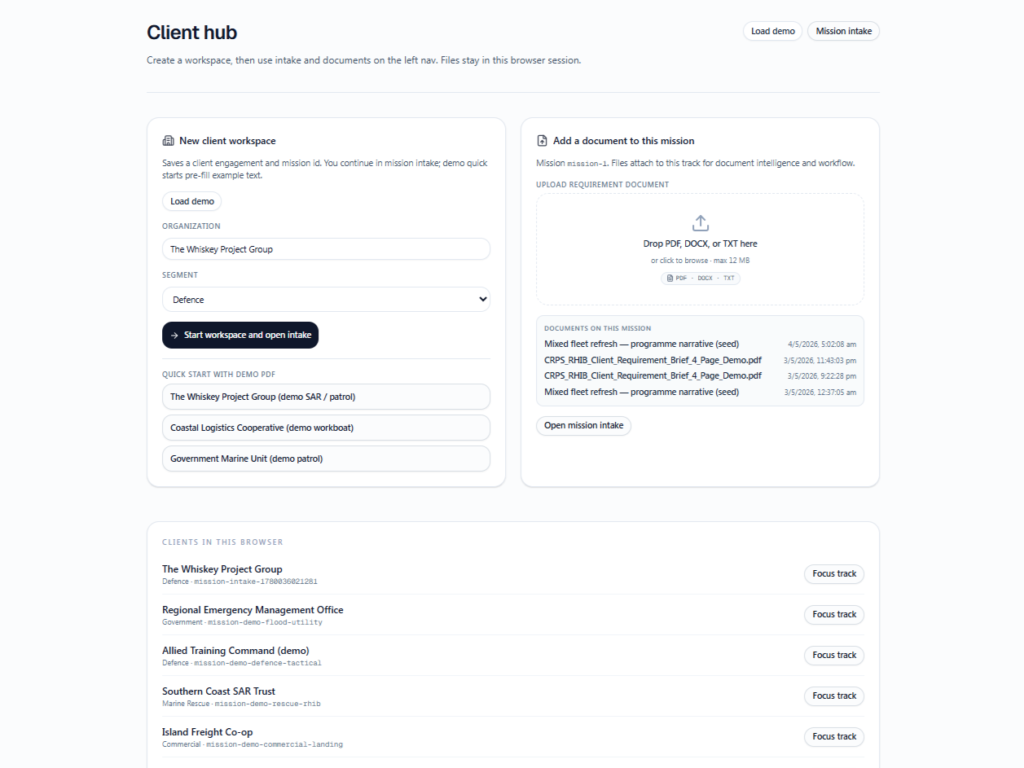
Client Hub is the starting point. A team can create a customer workspace, choose the operating segment, attach requirement documents and open a mission intake track. The same screen also supports demo tracks for defence, SAR and workboat scenarios, making it easy to show a realistic journey without needing production data. The outcome is a cleaner first conversation: fewer missing details, less manual reading and a clear handoff from intake to document intelligence and vessel fit.
Vessel Fit
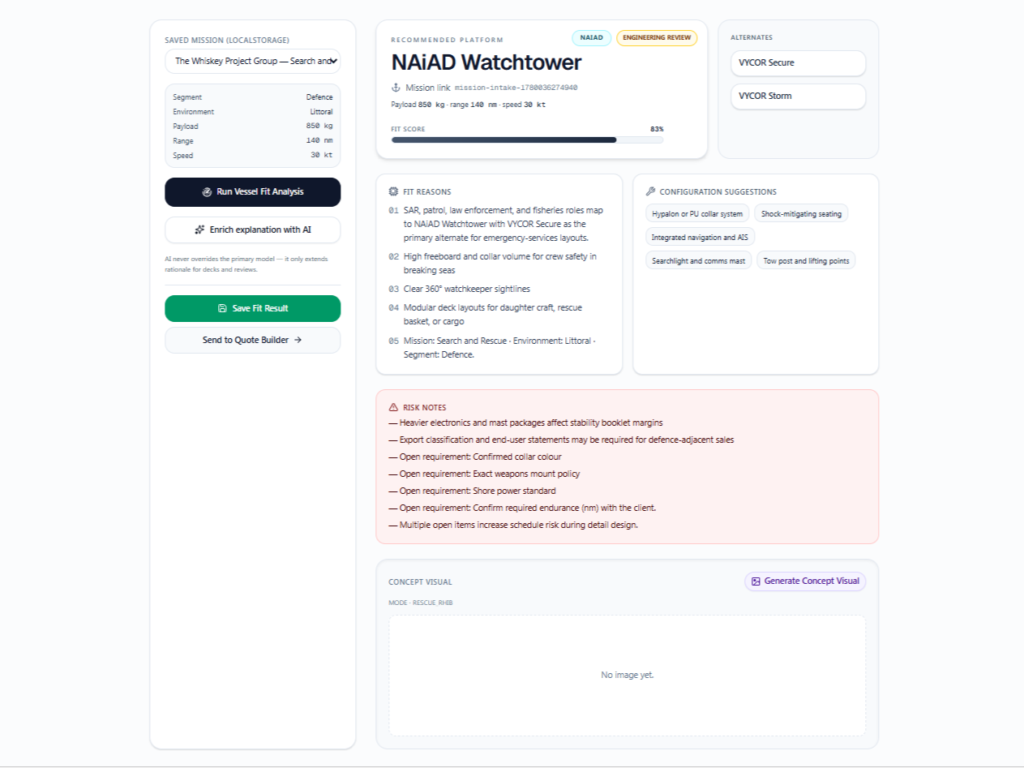
The vessel fit screen converts a mission into an explainable recommendation. Deterministic rules provide a reliable baseline, while AI enrichment can add rationale, alternates, risk notes and configuration suggestions. In a client demo, this is where the app moves from a static intake form to a decision-support engine. After vessel fit, the workflow continues into CPQ-style quote building, quote risk, and proposal generation.
The quote builder creates BOM-style pricing from package, region and catalog rules. The risk gate checks compliance, engineering gaps and clarification questions before the proposal studio creates client-facing copy, sales email text and an engineering handoff.
Predictive Maintenance
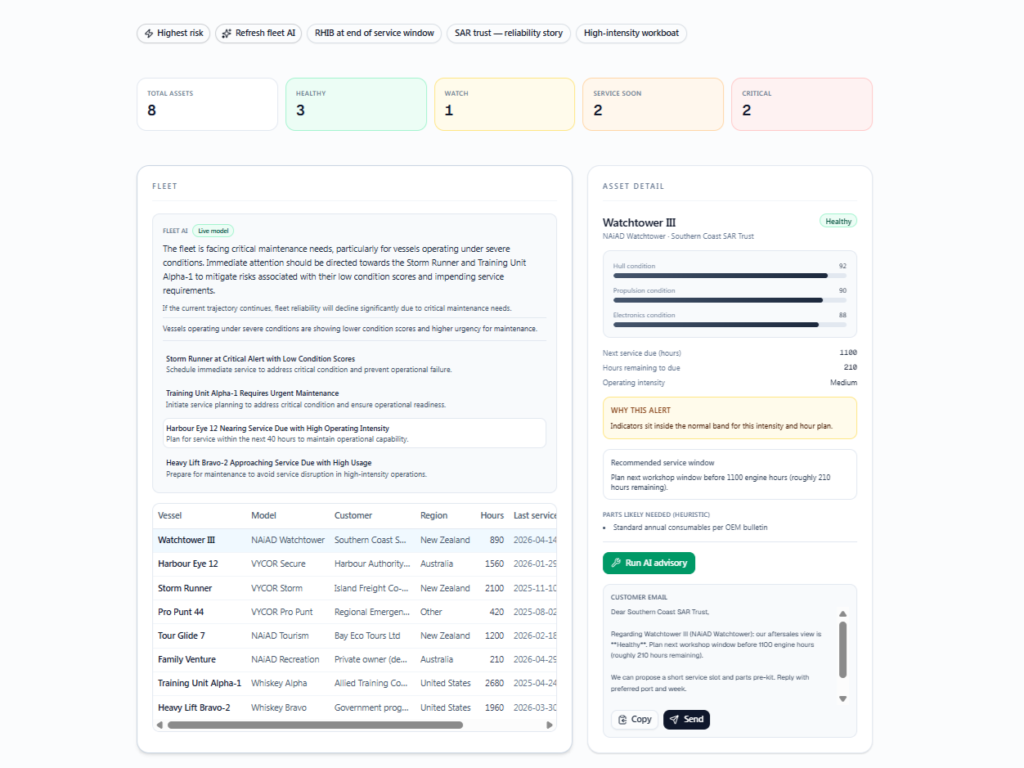
Marine AI Ops does not stop after the proposal. The predictive maintenance module shows how the same mission and asset data can support after-sales service. Fleet health cards surface healthy, watch, service-soon and critical assets. Selecting a vessel reveals hull, propulsion and electronics condition, next service due, operating intensity and a ready-to-send customer message.
Technologies Used
- Platform: Next.js, React 19
- AI Models: OpenAI + Google Gemini
- Database: Firebase — Auth, Firestore, Cloud Storage
- Infrastructure: Vercel Edge Network
- Industries: Marine Manufacturing