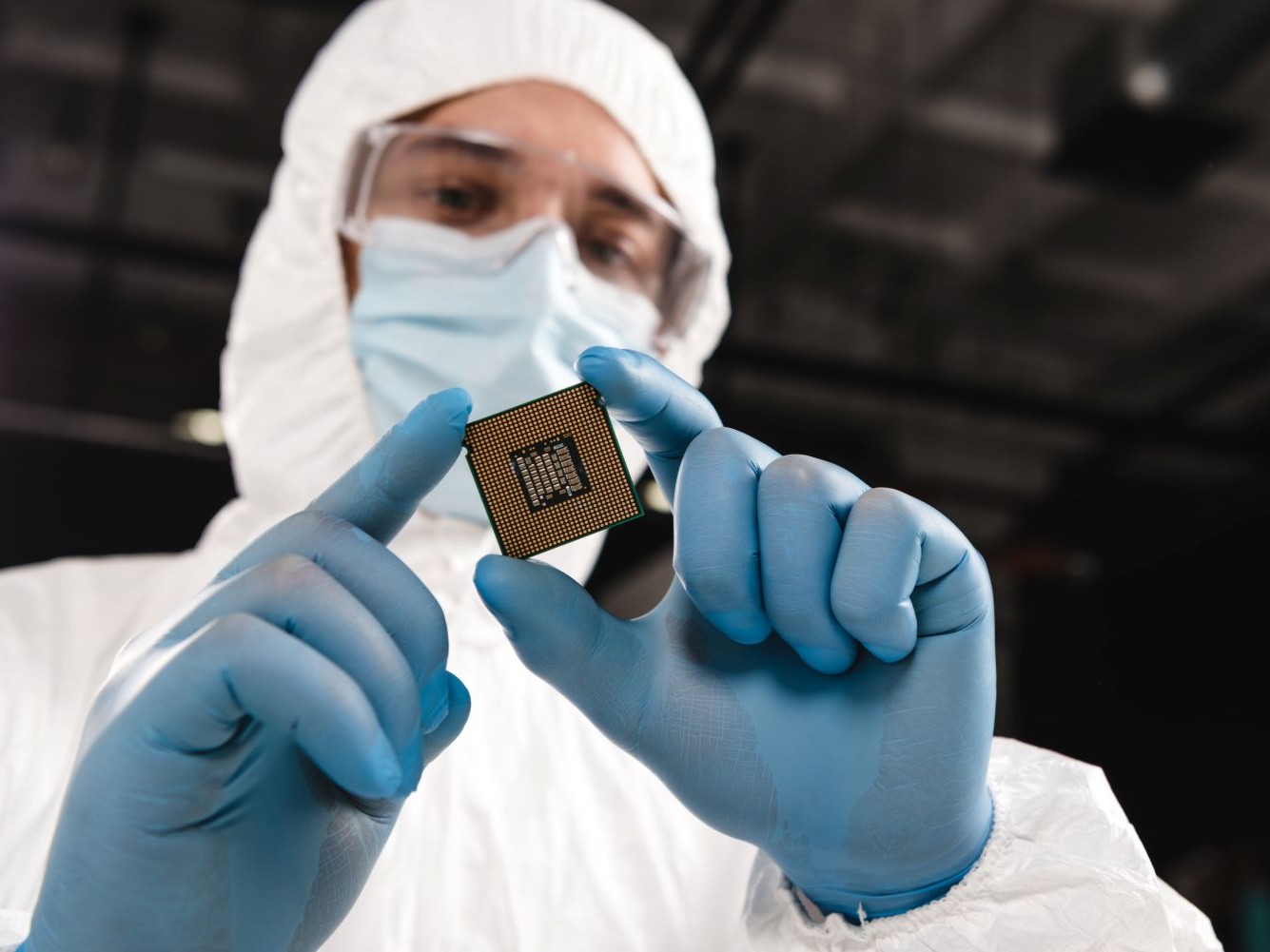
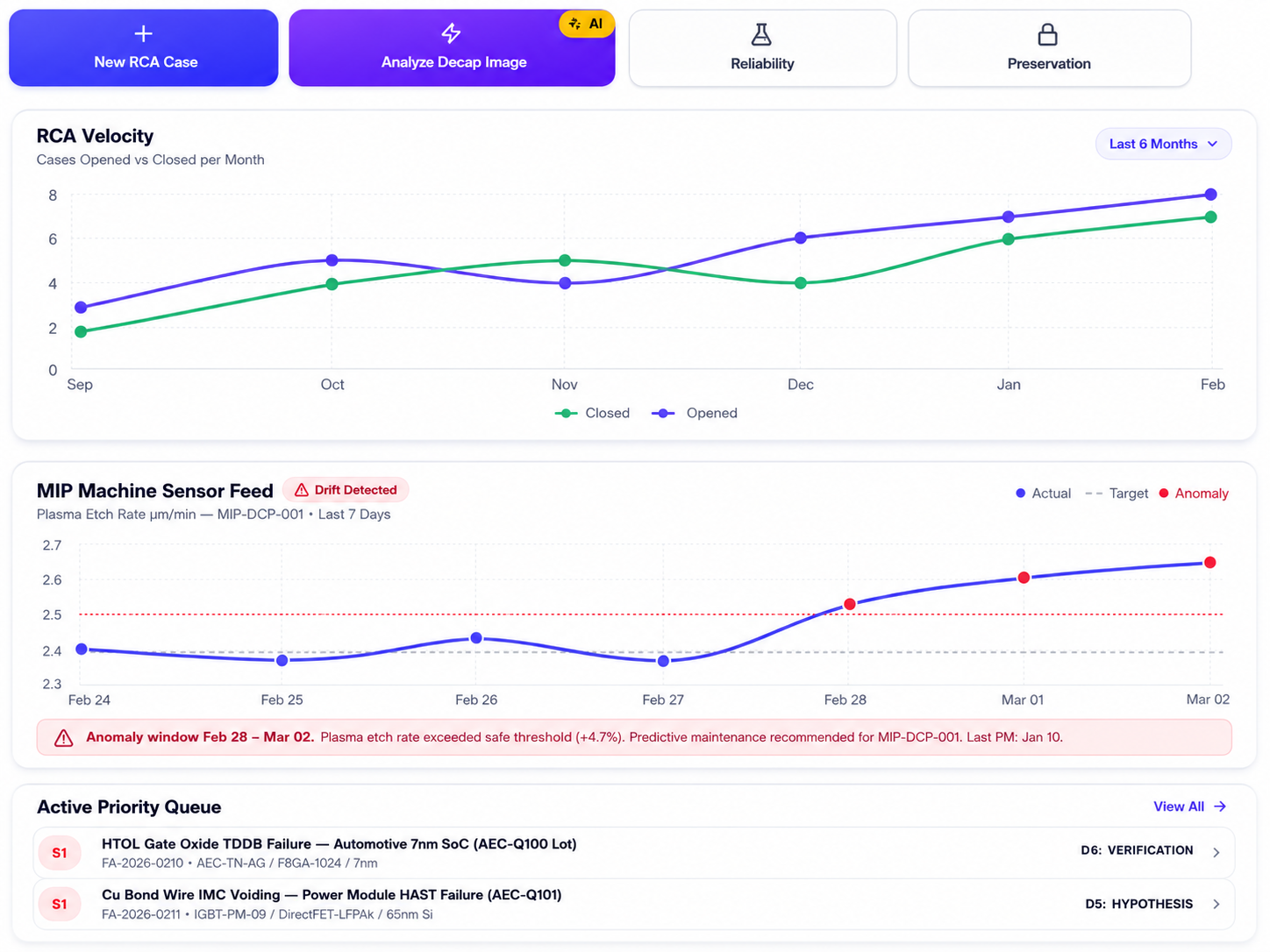
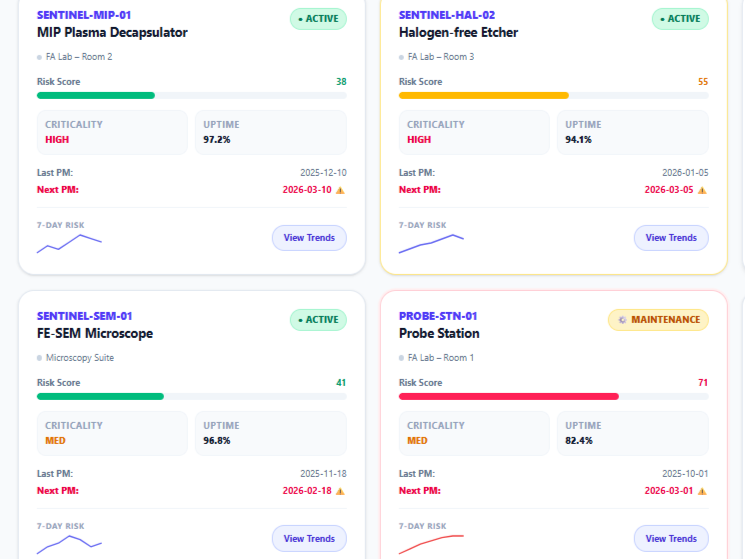
Every fab operations team knows the pain: a MIP decapsulator or CVD etcher drifts out of spec, the anomaly goes unnoticed until the next scheduled inspection, and a production run is lost. Semi-Sentinel’s Asset Intelligence module eliminates that blind spot by streaming live telemetry from all connected equipment — polling every five seconds. Plasma power, etch rate, chamber temperature, and pressure are displayed as real-time gauges alongside a rolling two-hour trend chart. When sensor readings approach threshold, the embedded AI model calculates a failure probability and surfaces a plain-language prediction — such as a 73% probability of etch rate degradation within 48 hours — with a one-click maintenance scheduling action, before any damage occurs.
Reliability Testing
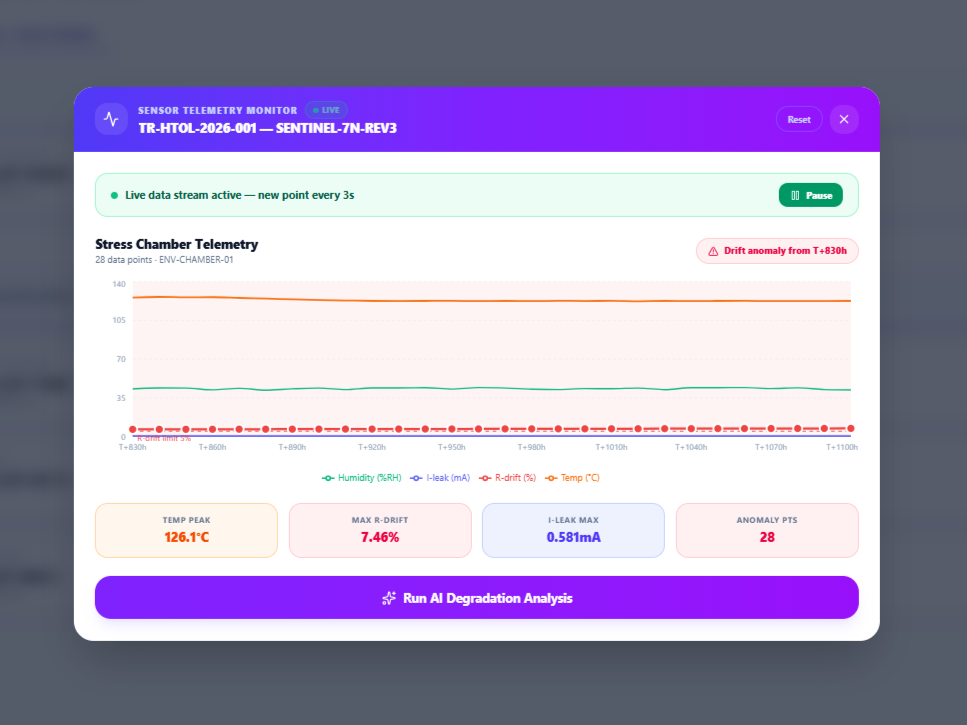
Running a High Temperature Operating Life test generates hundreds of data points across temperature, humidity, leakage current, and resistance drift — and identifying the exact hour where a device crosses from nominal into degradation typically requires a senior reliability engineer reviewing the raw logs manually. Semi-Sentinel replaces that process with an automated Sensor Telemetry Monitor that plots all four parameters on a single timeline, flags the anomaly onset point in real time, and computes summary statistics — peak temperature, maximum R-drift, I-leak maximum, and anomaly point count — the moment they exceed threshold. The AI Reliability Assessment then translates those numbers into a projected failure window, in this case approximately 980 hours at 93% confidence, giving teams the information needed to make go/no-go decisions without waiting for end-of-test read-outs.
Root Cause Analysis
A semiconductor failure investigation without a structured workflow produces incomplete reports, repeated hypotheses, and sign-off delays that push corrective actions past the next production build. Semi-Sentinel enforces discipline through an 8D stage-gated RCA workflow — Team, Description Containment, Analysis, Hypothesis, Verification, Prevention, Sign-off — where each stage must be completed before the next unlocks. The platform captures the full symptom summary, links uploaded evidence from the Evidence Vault, and uses Open AI to generate and rank root cause hypotheses from the intake data. Confirmed findings are recorded as structured text with direct corrective action references, and the full case timeline is maintained automatically. The result is a traceable, auditable FA report that meets automotive and JEDEC standards without manual document assembly.
Technologies Used
- Platform: Next.js, React 19, TypeScript 5
- AI Models: OpenAI (RCA reasoning, hypothesis generation, semantic search) + Google Gemini
- Database: Firebase — Auth, Firestore, Cloud Storage
- Infrastructure: Vercel Edge Network
- Industries: Semiconductor Failure Analysis, Reliability Engineering, Fab Operations