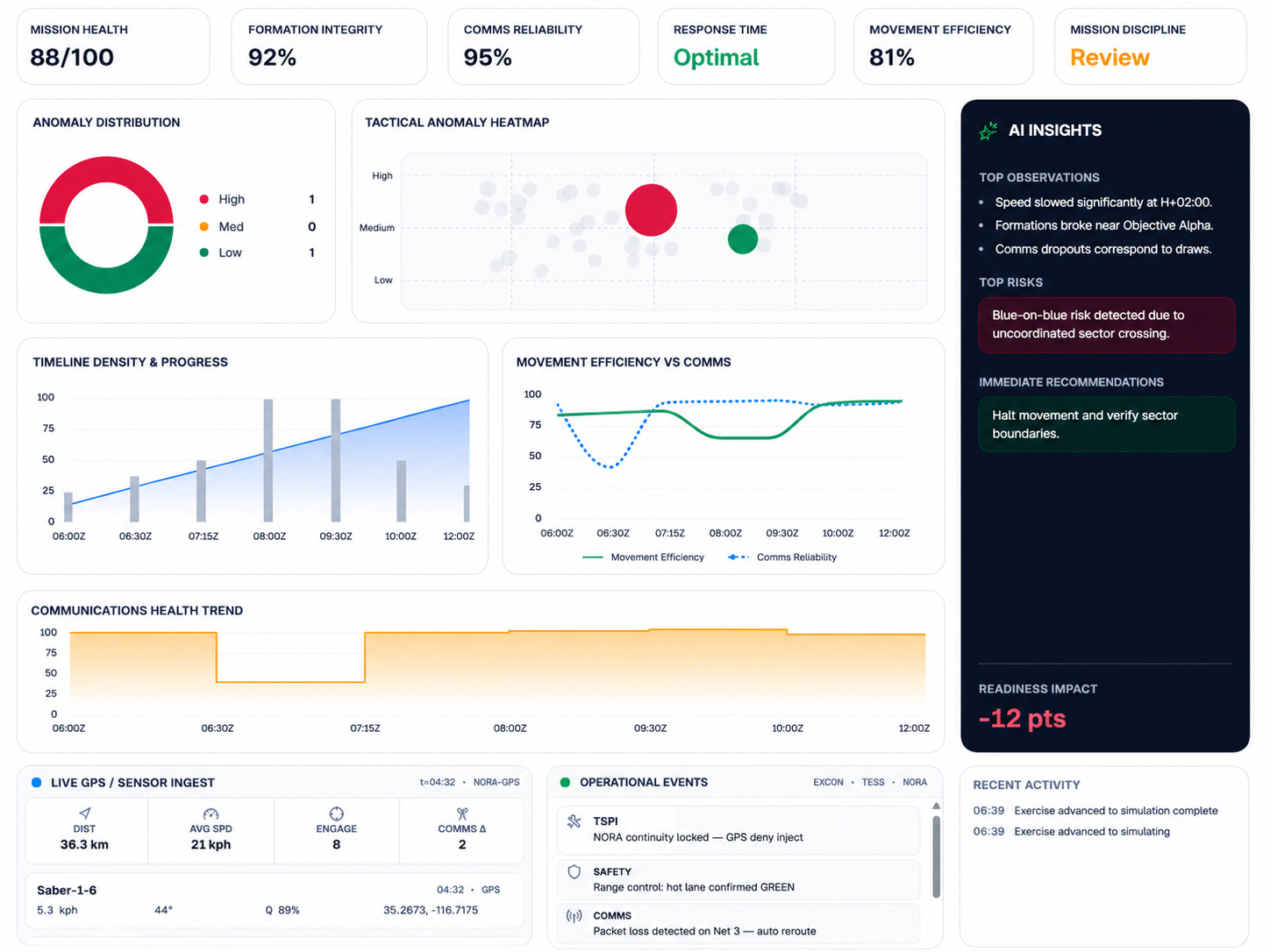
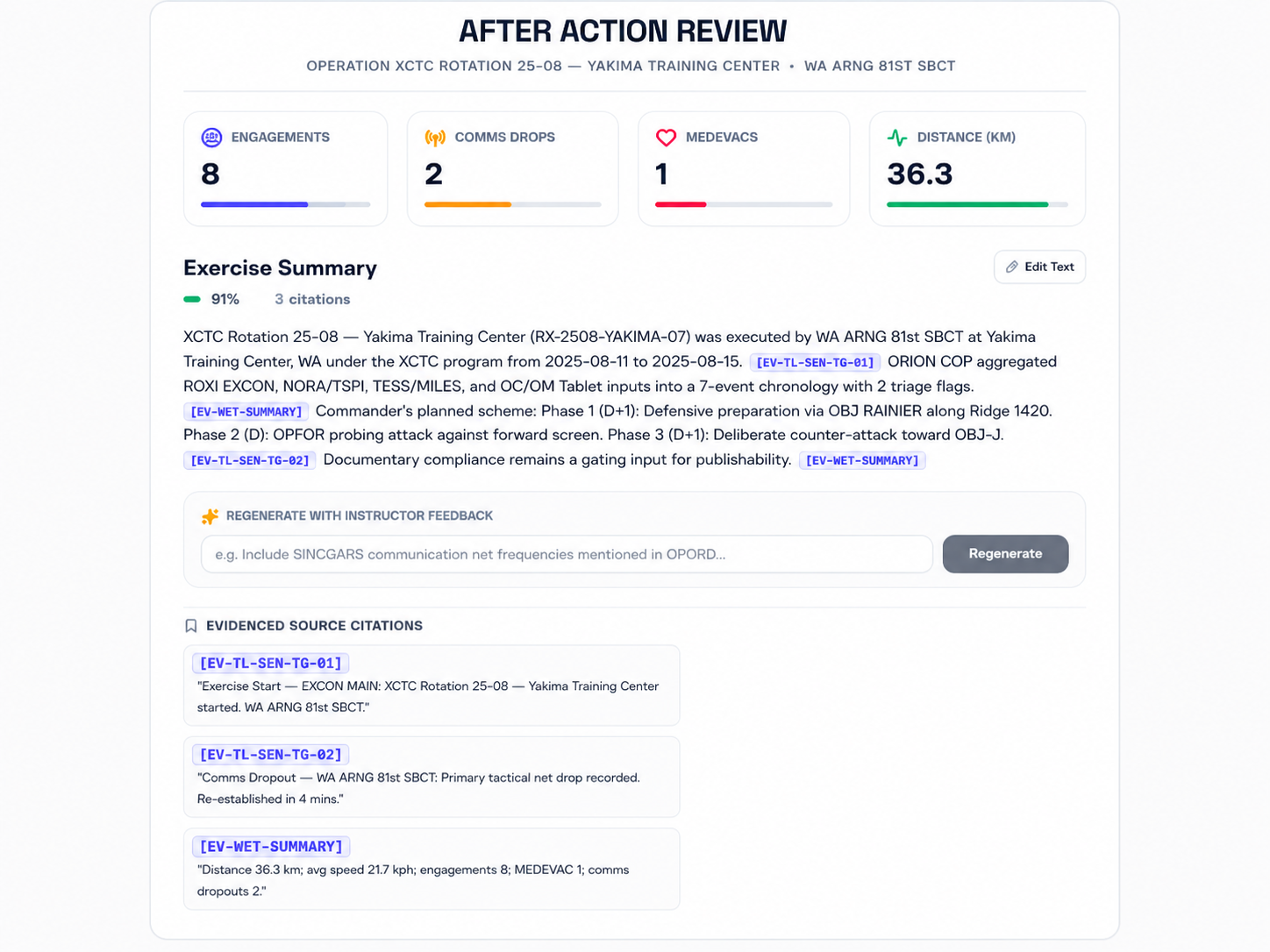
We created this project to modernize how military and tactical training exercises are evaluated, analyzed, and documented. By replacing manual, error-prone data consolidation with a centralized AI-powered operations platform, it transforms diverse inputs—such as GPS sensor feeds, range logs, observer notes, video recordings, and communication logs—into structured exercise timelines, performance insights, and compliance profiles. From data intake to final After-Action Report (AAR) publication, the platform provides a unified operational workspace for commanders, analysts, and review teams. It automates evidence collection, identifies key events and performance gaps, tracks compliance, generates actionable recommendations, and ensures every review is faster, more accurate, and fully auditable.
After Action Review
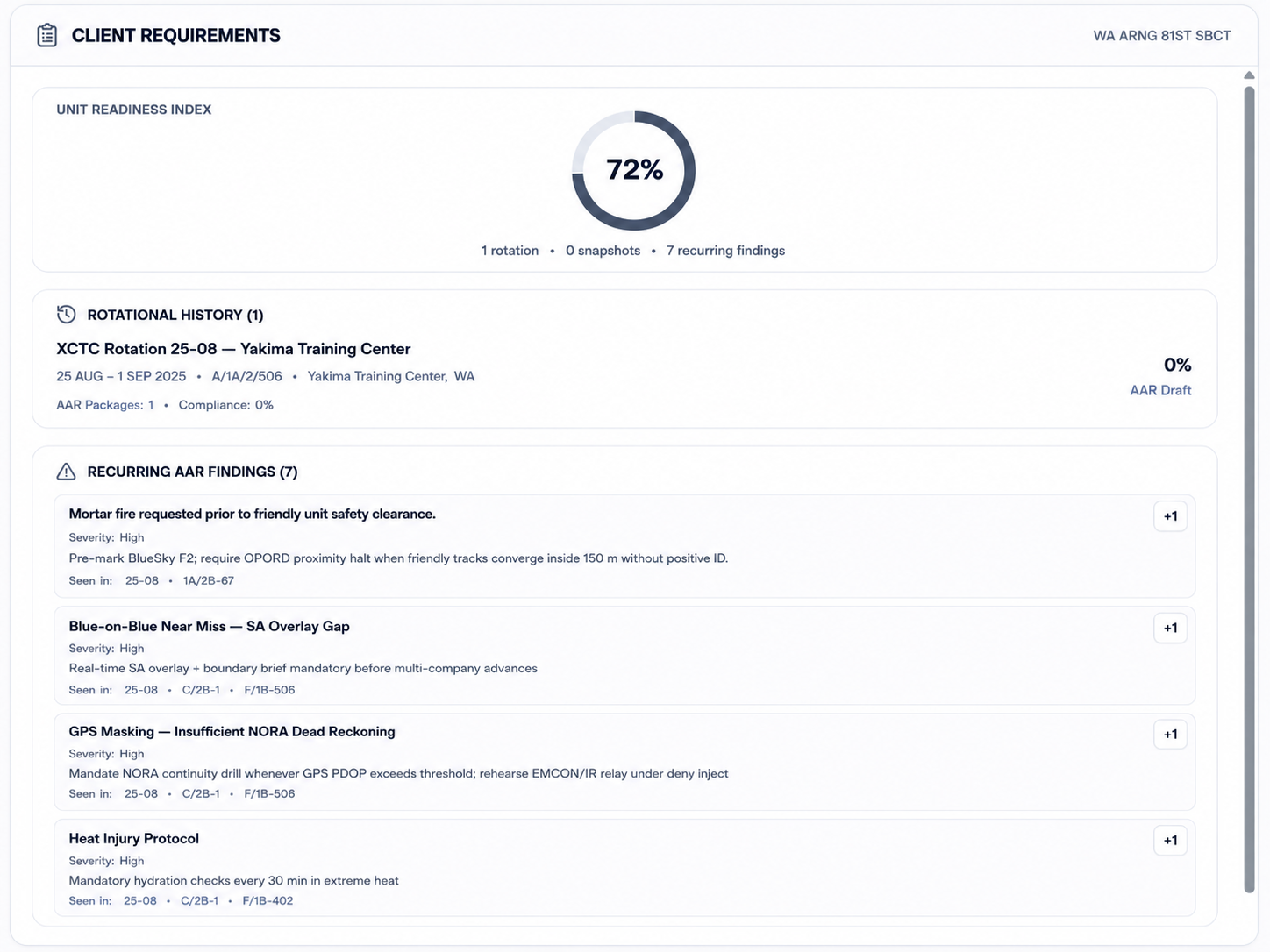
Closing the loop on the training lifecycle is the AI Training Optimizer, a predictive scenario planning tool that translates AAR findings into actionable readiness steps. By assessing the unit’s documented deficiencies, the optimizer runs historical analysis to recommend tailored next-rotation scenarios—such as route deconfliction or GPS-denied navigation. Each recommendation is paired with targeted KPIs and projected readiness gains, empowering instructors to execute adaptive, data-driven training regimens that directly address performance gaps.
AI Training
Everything downstream in the flywheel depends on one fragile thing: a 1 mm scanning fiber staying in calibration. When a console drifts, images blur, labels go wrong, and clinical and regulatory evidence quietly weakens — usually noticed only after the bad frames are already in the pipeline. Predictive Maintenance monitors every SFE console like a fleet of machines, tracking calibration drift (mm), piezo temperature (°C), and fiber tension (N) on live charts across all four demo sites. The logic is deliberately simple to explain on stage: the last twenty readings set a normal baseline, and the most recent three are flagged only if they’re all above mean + 1.5σ and still rising. BHL-R&D-01 at the Manufacturing R&D lab is the hero — it trips a CRITICAL alert while the three clinical consoles stay low-risk, so the demo shows the system catching a real problem without lighting up everything red. Run AI diagnostic turns raw sensor numbers into a plain-language ops brief with a recommended action and an “inspect within ~X hours” window anyone can act on.
Technologies Used
- Platform: Next.js, React 19
- AI Models: Claude + Gemini
- Database: Firebase — Auth, Firestore, Cloud Storage
- Infrastructure: Vercel Edge Network
- Industries: Aerospace & Defence