
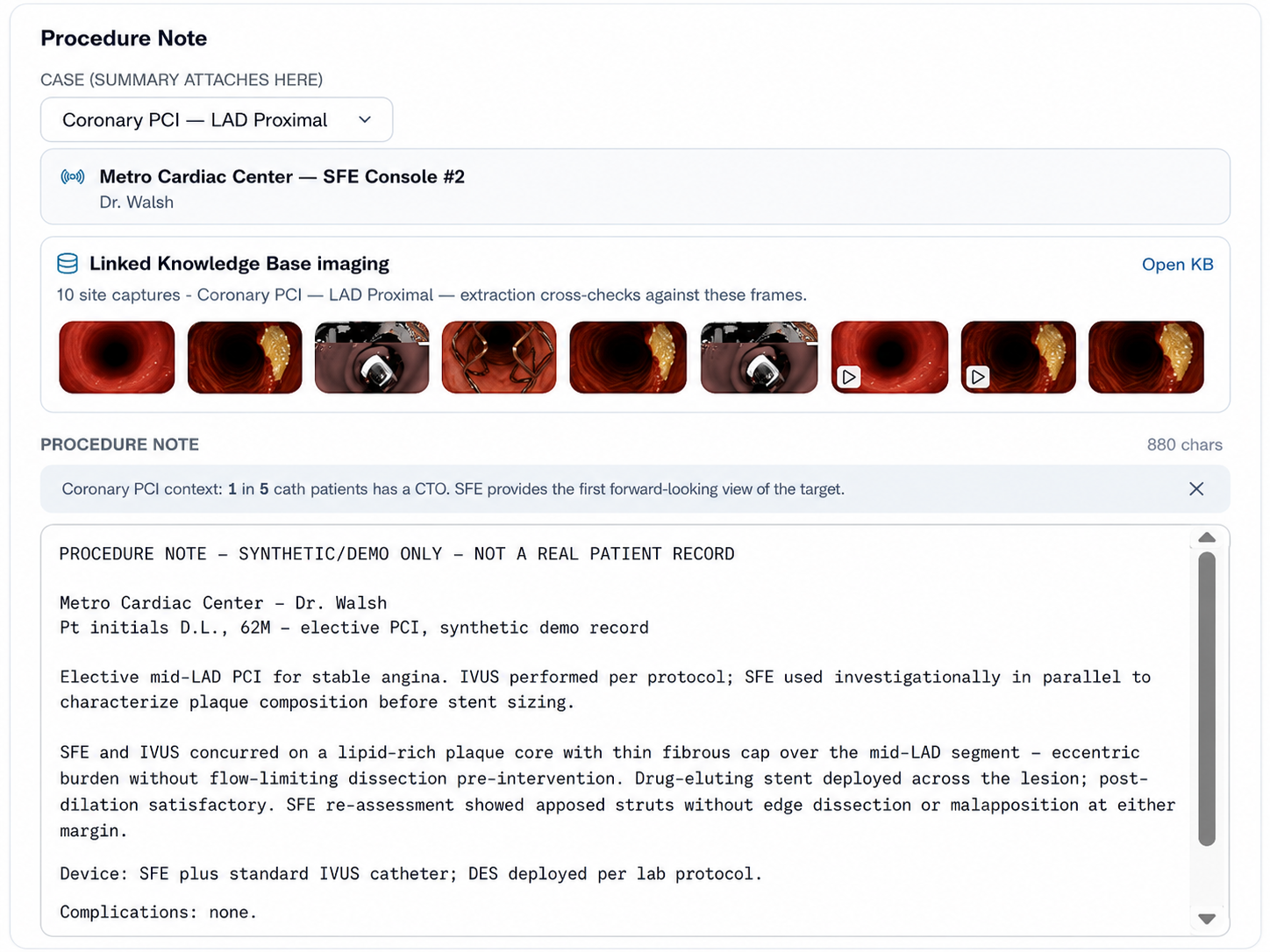
We created this project to solve the fragmented workflows common in medical imaging programs. Today, hospital consoles capture SFE runs, researchers manually review image quality, clinical teams re-enter procedure notes, regulatory teams search through extensive FDA guidance, and scanner calibration issues often go unnoticed until image quality is affected.
Our solution brings these disconnected processes into a single intelligent workflow, connecting imaging data, clinical documentation, hardware health, and regulatory evidence. From image capture to a 510(k)-ready evidence package and communication back to the capture site, the entire process remains connected, efficient, and traceable.
Regulatory Review
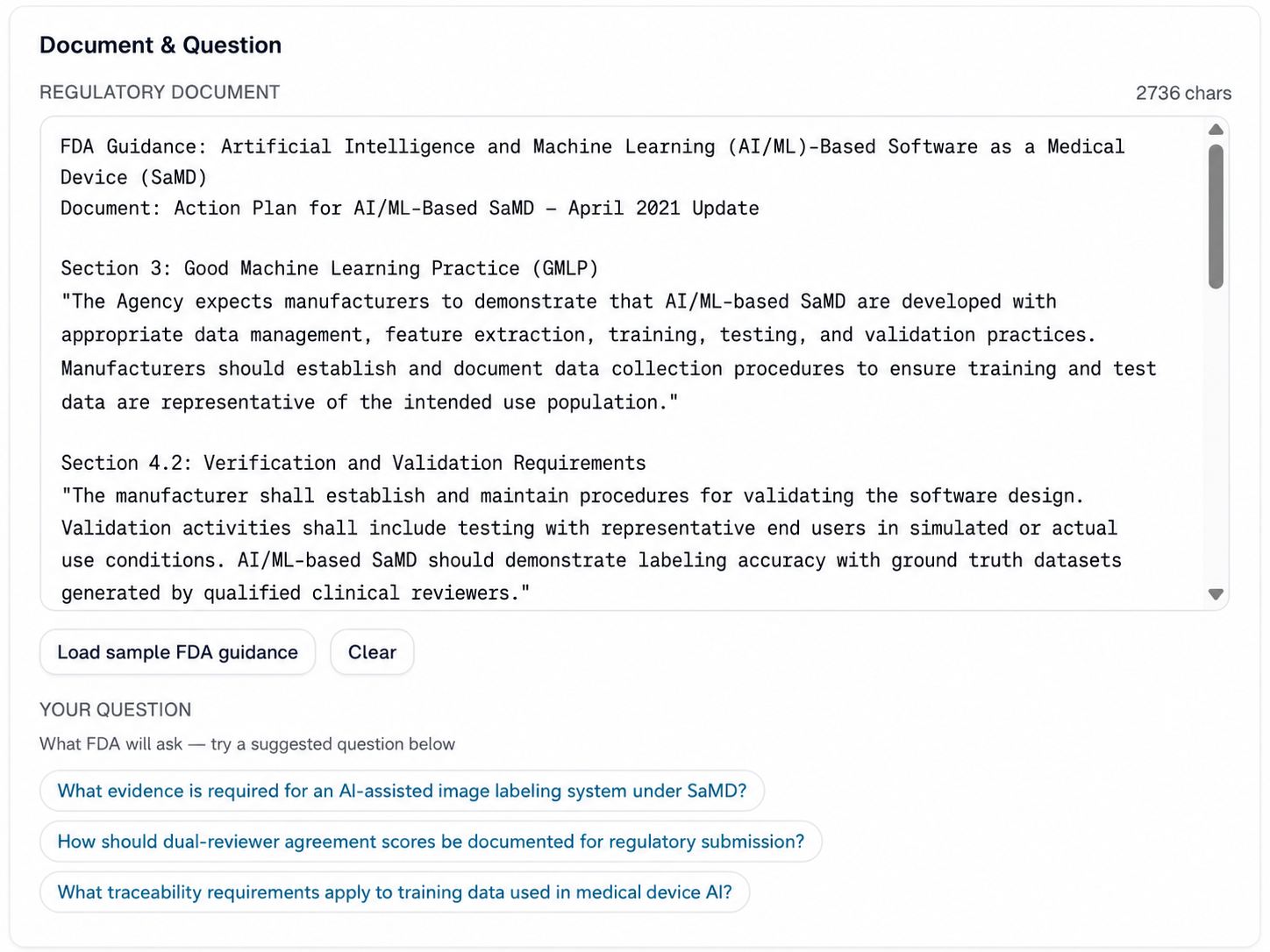
Medical-device teams have to prove things — labeling quality, training-data provenance, traceability for AI/ML SaMD — and the evidence is scattered across eighty-page FDA guidance documents. Regulatory Review is the compliance copilot. In Ask Your Documents, you load the FDA AI/ML SaMD action plan, ask a question in plain English (“What evidence is required for an AI-assisted image-labeling system?”), and get a drafted answer with citations back to the exact guidance sections — plus similar prior Q&A pulled from the Knowledge Base. The Evidence Pack tab is where the flywheel pays off: one click assembles a regulatory-ready pack for the active case, pulling KB frame counts, annotated frames, the Clinical Extractor’s structured fields, and dual-
reviewer QA agreement, then maps them to design controls and a 510(k) narrative against an H2 2026 clearance target. A Live Intelligence Feed tags funding, regulatory, competitive, and partnership news for investor and strategy conversations. Instead of reading the guidance, you ask it a question — and the case builds its own evidence.
Predictive Maintenance
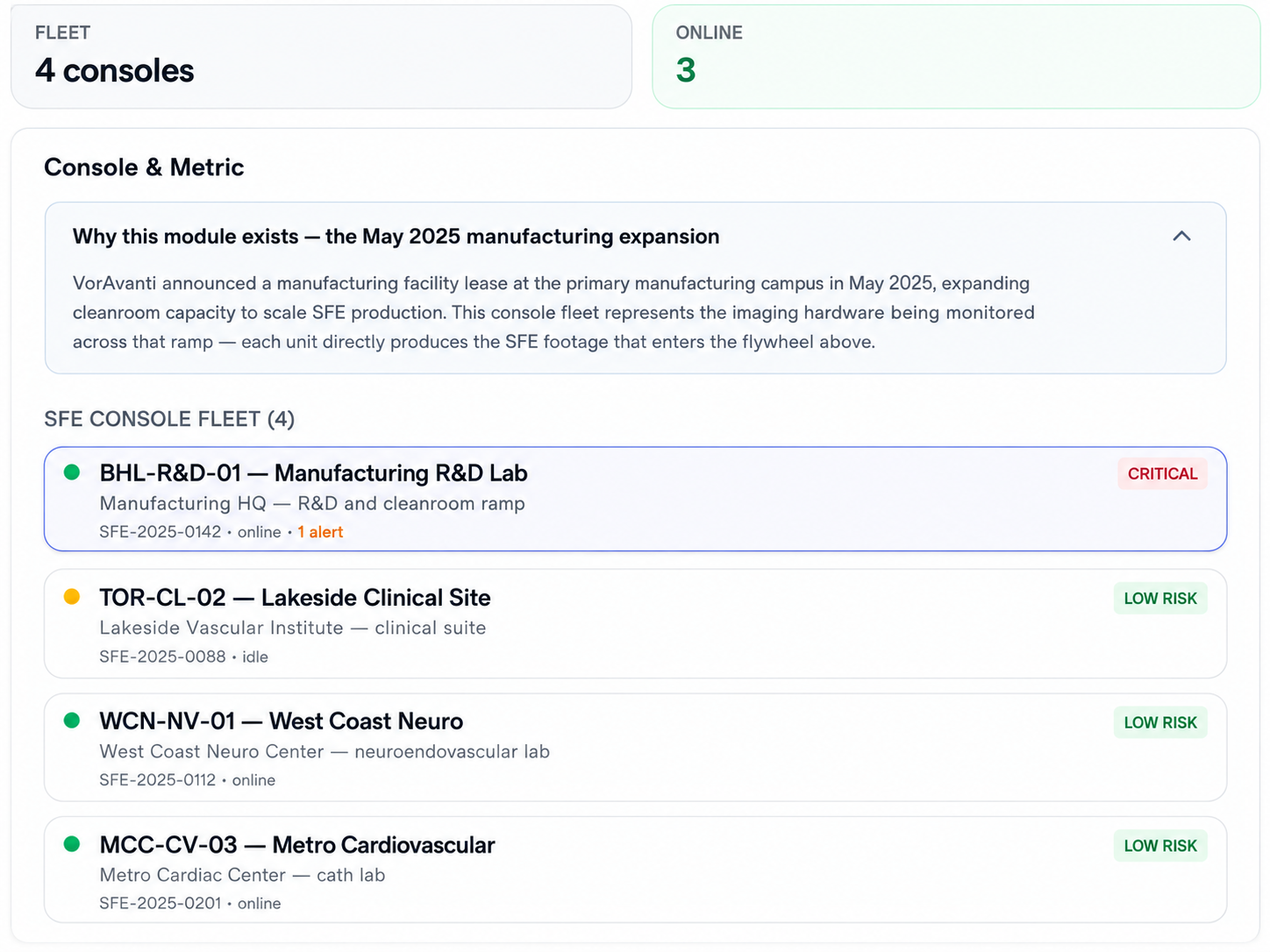
Everything downstream in the flywheel depends on one fragile thing: a 1 mm scanning fiber staying in calibration. When a console drifts, images blur, labels go wrong, and clinical and regulatory evidence quietly weakens — usually noticed only after the bad frames are already in the pipeline. Predictive Maintenance monitors every SFE console like a fleet of machines, tracking calibration drift (mm), piezo temperature (°C), and fiber tension (N) on live charts across all four demo sites. The logic is deliberately simple to explain on stage: the last twenty readings set a normal baseline, and the most recent three are flagged only if they’re all above mean + 1.5σ and still rising. BHL-R&D-01 at the Manufacturing R&D lab is the hero — it trips a CRITICAL alert while the three clinical consoles stay low-risk, so the demo shows the system catching a real problem without lighting up everything red. Run AI diagnostic turns raw sensor numbers into a plain-language ops brief with a recommended action and an “inspect within ~X hours” window anyone can act on.
Technologies Used
- Platform: Next.js, React 19
- AI Models: Claude + Gemini
- Database: Firebase — Auth, Firestore, Cloud Storage
- Infrastructure: Vercel Edge Network
- Industries: Medical & HealthCare